Altcoin Season Index: Track Crypto Market Trends and Altcoin Performance

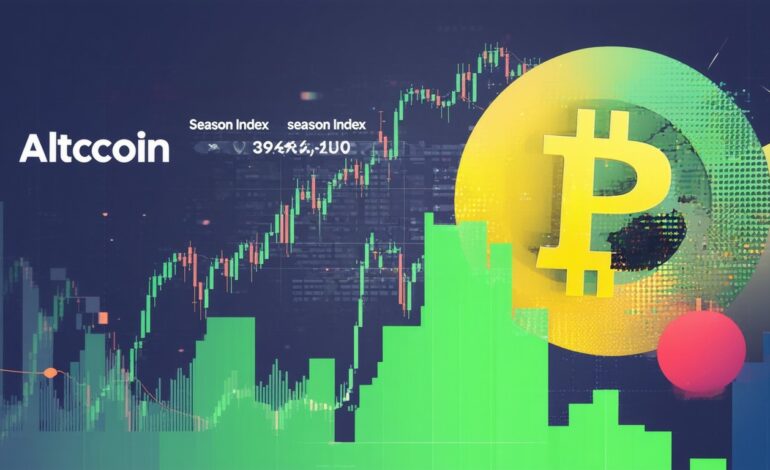
In the fast-evolving cryptocurrency landscape, the Altcoin Season Index has emerged as an essential tool for gauging sentiment and performance beyond Bitcoin. As investors seek signals for bullish phases in everything from Ethereum and Solana to emerging DeFi tokens, the question becomes clear: How and when do altcoins outshine Bitcoin, and how can one track such cycles systematically? The Altcoin Season Index offers a data-driven answer.
What Is the Altcoin Season Index?
At its core, the Altcoin Season Index quantifies whether the broader crypto market is in a “Bitcoin season” or an “altcoin season.” The index typically ranges from 0 to 100, calculated based on the performance of a basket of top altcoins relative to Bitcoin over a set period—commonly 90 days.
For instance, if 75% or more of major altcoins outperform Bitcoin in a three-month window, the market is considered to be in “altcoin season.” Conversely, if Bitcoin outpaces most altcoins, the environment is classified as a Bitcoin season.
Why Does the Index Matter?
Tracking the Altcoin Season Index is crucial for retail and institutional traders alike, as it helps:
- Measure capital rotation within crypto markets
- Identify momentum shifts favoring altcoins or Bitcoin
- Adjust portfolio strategies according to evolving cycles
“The Altcoin Season Index distills massive flows of crypto market data into a simple gauge—enabling investors to orient themselves amidst volatility,” says John Wu, President of Ava Labs.
The Mechanics Behind the Altcoin Season Index
Calculation Methodology and Inputs
Most Altcoin Season Indexes survey the top 50–100 cryptocurrencies (excluding Bitcoin and occasionally stablecoins) by market capitalization. Key calculation steps include:
- Comparing the 90-day price performance of each altcoin to Bitcoin
- Counting how many altcoins outperform BTC during this window
- Expressing the result as a percentage, then scaling for the index
For example, if 40 out of 50 tracked altcoins delivered higher returns than Bitcoin, the index would read 80—deep in altcoin season territory.
Notable Data Sources and Platforms
Websites like BlockchainCenter.net have popularized the Altcoin Season Index with real-time updates and historical charts. Exchanges and analytics tools such as CoinGecko and Messari incorporate similar metrics, often supplementing the index with heatmaps and sector breakdowns for deeper analysis.
Real-World Examples: Altcoin Season in Action
Historic Altcoin Seasons
Several periods stand out in recent crypto history:
- Spring 2021: Ethereum hit all-time highs, and numerous DeFi and NFT projects—such as Polygon and Dogecoin—far outpaced Bitcoin’s gains. The Altcoin Season Index consistently hovered above 75 during this period.
- Late 2017/Early 2018: The original “ICO boom” drove dozens of altcoins to extraordinary returns, reflecting explosive interest and speculation in the sector.
In both cases, rapid capital inflows shifted focus from Bitcoin to the broader altcoin ecosystem, driving narratives around blockchain innovation.
Drivers of Altcoin Seasons
Key catalysts often include:
- Upgrades or network launches (e.g., Ethereum 2.0 rollouts)
- Regulatory news affecting Bitcoin more than altcoins
- New use cases (NFTs, DeFi platforms, gaming tokens)
- Shifts in investor sentiment around risk and opportunity
By analyzing these triggers alongside the Altcoin Season Index, investors gain context for market moves.
Using the Index for Strategic Investment Decisions
Tactical Allocation
For sophisticated traders, the Altcoin Season Index serves as both a thermometer and a compass. A high index value may signal increased risk appetite—and the potential for outsized gains (or losses) in lesser-known tokens.
Portfolio Adjustments
- Enter altcoin positions: When the index flags a strong altcoin season, diversification beyond Bitcoin can amplify returns.
- Risk management: High index readings warrant tighter stop-losses, as altcoin volatility can swing quickly in either direction.
- Exiting to safety: If the index turns and signals an end to an altcoin season, reallocating into Bitcoin or stablecoins may preserve gains.
Beyond Trading: Ecosystem Insights
Long-term builders and analysts use Altcoin Season Index data to anticipate capital flows, monitor developer activity, and spot emerging trends in blockchain infrastructure or application sectors.
Limitations and Considerations
No index is foolproof, and the Altcoin Season Index has its caveats:
- Short-term indicators: It reflects recent momentum, not fundamental value.
- Market composition changes: The leaderboard of top altcoins shifts, introducing survivorship bias.
- Sentiment-driven swings: Extreme readings may precede corrections as profit-taking or regulatory headlines intervene.
As with any trading signal, blending Altcoin Season Index readings with broader technical, fundamental, and macroeconomic analysis remains essential.
“Indexes can illuminate patterns, but investors must balance signals with due diligence, especially in emergent and volatile asset classes like crypto,” notes Meltem Demirors, Chief Strategy Officer at CoinShares.
Conclusion: Navigating Crypto with the Altcoin Season Index
The Altcoin Season Index stands out as a practical, data-based lens for reading crypto’s ever-changing landscape. Whether identifying the start of a fresh altcoin rally or warning of overheated speculation, it adds context and strategic agility to investment decisions. Ultimately, its greatest value is not in prediction—but in preparation, empowering both novice and experienced participants to move with purpose in unpredictable markets.
FAQs
What defines an “altcoin season”?
An altcoin season occurs when most major alternative cryptocurrencies outperform Bitcoin over a set period, often measured by the Altcoin Season Index.
How is the Altcoin Season Index calculated?
The index typically compares recent returns of top altcoins versus Bitcoin. If a majority outperform BTC in a given timeframe (commonly 90 days), the index signals altcoin season.
Can the Altcoin Season Index predict market reversals?
While the index highlights strong altcoin momentum, abrupt market shifts can occur due to news, regulation, or liquidity events. It’s best used alongside other analysis tools.
Where can I find live Altcoin Season Index data?
Resources like BlockchainCenter.net and major analytics platforms routinely publish updated Altcoin Season Index values and explanatory charts.
Is tracking the index useful for long-term investors?
Yes, it helps long-term investors spot cycles of broader crypto adoption and informs decisions on portfolio diversification and rebalancing.