Best NFTs for Long-Term Investment: Ultimate Guide

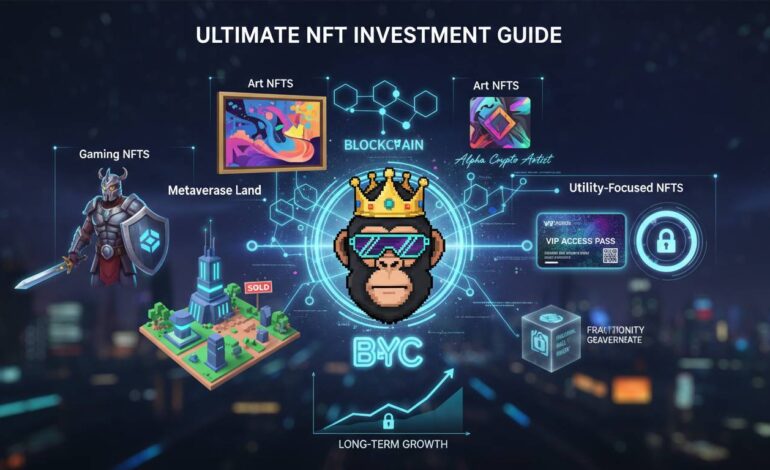
The NFT market has matured significantly since its 2021 peak, evolving from pure speculation toward utility-driven assets with real-world applications. For investors seeking long-term value, understanding which NFTs offer genuine utility, strong communities, and sustainable economic models has become essential. This guide examines the NFT landscape, evaluates proven projects, and provides actionable strategies for building a resilient long-term portfolio.
Understanding NFT Investment Fundamentals
Before diving into specific projects, successful NFT investment requires understanding the fundamental metrics that separate lasting value from fleeting hype. The NFT market reached approximately $25 billion in trading volume during 2022, according to data from various analytics platforms, though this figure has stabilized considerably as the market matured.
Utility remains the primary differentiator for long-term NFT viability. While purely speculative ” JPEG” NFTs captured early headlines, those with practical applications—governance rights, access privileges, intellectual property licensing, and integration with broader Web3 infrastructure—demonstrate stronger retention of value. The most successful long-term NFT projects function less like collectibles and more like membership tokens that appreciate as the underlying ecosystem grows.
Community strength serves as the second critical factor. NFT projects with active, engaged communities consistently outperform those relying solely on celebrity endorsements or marketing spend. Discord activity, governance participation, and organic social engagement provide reliable indicators of community health. Projects that have weathered market downturns while maintaining active developer teams and loyalholder bases represent lower-risk long-term investments.
Scarcity dynamics also influence long-term value, though the relationship is more nuanced than simple supply constraints. Infinite supply with genuine utility often outperforms capped supply without use case. The key question becomes whether the NFT provides ongoing access to services, revenue shares, or governance powers that create sustained demand regardless of initial minting numbers.
Blue-Chip NFTs with Strong Track Records
The “blue chip” designation in NFTs refers to projects with established track records, significant trading history, and recognition beyond the crypto ecosystem. These projects have demonstrated resilience through multiple market cycles and maintain substantial holder communities.
Bored Ape Yacht Club (BAYC) remains the most recognizable NFT collection globally, with floor prices and trading volumes consistently leading the market despite significant volatility. The collection’s floor price peaked at approximately 153.7 ETH in May 2022, and while subsequent market conditions compressed values substantially, BAYC has maintained its position as the benchmark for community-centric NFT projects. The project expanded into utility through ApeCoin governance token distribution, Sandbox game integration, and various license agreements allowing holders to commercialize their specific ape images. For long-term investors, BAYC’s primary value proposition lies in its intellectual property rights—the ability to create and monetize products featuring individual NFT imagery represents genuine utility unavailable in most other collections.
CryptoPunks, originally distributed free in 2017, represent the earliest NFT collectibles and maintain significant cultural capital within the space. With only 10,000 pieces and well-documented ownership history, CryptoPunks function as digital artifacts with historical significance comparable to first-edition printing press outputs. The collection has achieved museum recognition and auction house validation through sales at major venues including Christie’s and Sotheby’s. For long-term portfolios, CryptoPunks offer relative stability compared to newer collections, though their utility remains limited primarily to collector value and status signaling.
Azuki emerged as a leading collection during the 2022 market cycle, distinguishing itself through strong aesthetic identity and the “Elemental” launch that experimented with new distribution models. The project’s subsequent Beanpodscitings and brand expansion into physical merchandise demonstrated approach to building broader intellectual property value. While the collection experienced significant price compression, it maintains one of the most active Discord communities and developer roadmaps among profile picture NFT projects.
Utility-Focused NFTs with Real-World Application
Beyond collectible-focused projects, utility NFTs that provide functional access to services, governance rights, or revenue-sharing mechanisms offer distinct long-term investment characteristics.
ENS Domains (Ethereum Name Service) represent one of the most practically useful NFT categories for long-term holders. ENS domains function as human-readable cryptocurrency addresses, replacing complex alphanumeric strings with names like “vitalik.eth.” These domains require annual renewal fees, creating recurring revenue for the protocol while providing genuine utility to holders who use them for wallet addresses, decentralized websites, and identity verification. Domain length significantly influences value—shorter, dictionary-word domains command substantial premiums, while longer domains serve functional purposes at lower price points. The ENS protocol has distributed airdrops to early adopters and continues developing integration across Web3 applications, making domains increasingly valuable as the ecosystem expands.
Chainlink (LINK) staked NFTs represent an emerging utility category combining infrastructure services with collectible mechanics. Chainlink’s transition toward proof-of-stake mechanics includes staked NFTs representing validator positions within the network. These NFTs provide both functional utility—participating in oracle services that power decentralized finance—and potential for value appreciation as network activity increases. While relatively new compared to collectible NFTs, infrastructure-adjacent utility positions these assets favorably as enterprise blockchain adoption accelerates.
GPT Protocol and similar intellectual property-focused NFT projects represent another utility category gaining attention. These projects aim to fractionalize ownership of intellectual property, allowing NFT holders to receive licensing fees, revenue shares, or governance rights over creative works. While this category remains early in development, the fundamental concept—NFTs as vehicles for rights management and revenue distribution—aligns with practical business applications beyond speculation.
Comparing NFT Investment Strategies
Long-term NFT investment strategies generally fall into three approaches, each with distinct risk profiles and required expertise.
Blue-chip accumulation involves purchasing established collections with track records exceeding two years, holding through market cycles, and waiting for eventual ecosystem expansion or institutional adoption to drive appreciation. This approach requires significant capital—floor prices for top collections typically range from several thousand to hundreds of thousands of dollars—but reduces risk through proven resilience. The primary risk involves continued market contraction if NFT utility fails to expand beyond current use cases.
Utility-layer investing focuses on NFTs providing functional services rather than collectible value. ENS domains, protocol governance positions, and infrastructure participation NFTs fall into this category. The investment thesis relies on specific service adoption rather than broader market sentiment, providing more direct connection to real-world blockchain usage. This approach requires understanding specific protocol economics and often involves higher technical complexity.
Emerging project speculation involves identifying early-stage collections with potential for exponential growth. This highest-risk, highest-reward approach requires deep community analysis, trend identification, and willingness to accept near-total loss on unsuccessful projects. Most successful emerging-project investors diversify across many positions with small allocations, acknowledging that predicting which projects achieve breakout success remains largely impossible.
For most long-term investors, a hybrid approach combining primarily blue-chip holdings with smaller utility-layer allocations provides the optimal balance of stability and growth potential. The specific ratio depends on individual risk tolerance, capital availability, and interest in actively managing the portfolio.
Common Mistakes to Avoid
Several recurring patterns consistently produce losses for NFT investors pursuing long-term strategies.
Buying at market peaks represents the most common error, with many investors purchasing during bull market excitement only to watch values compress 80-95% during subsequent corrections. Patience and disciplined entry point selection significantly impact long-term returns.
Ignoring liquidity creates hidden risks for long-term holders. NFT markets can experience extended periods of low trading activity, meaning “paper gains” may prove unrealizable when sellers attempt to exit positions. Collections with established market makers and consistent trading volume offer more reliable liquidity than newer or smaller projects.
Overestimating utility claims leads investors to purchase NFTs based on promised future features that never materialize. Successful long-term investing requires evaluating current utility rather than future roadmaps, no matter how ambitious the team roadmap appears.
Neglecting total cost of ownership catches many long-term holders off guard. Annual renewal fees for ENS domains, gas costs for transactions, and platform fees for secondary market sales accumulate significantly over multi-year holding periods. Calculating all-in costs before investment ensures realistic return expectations.
How to Evaluate NFTs Before Buying
Systematic evaluation frameworks improve long-term investment outcomes by reducing emotional decision-making and identifying genuine value opportunities.
Due diligence checklist:
-
Community analysis: Examine Discord member counts, active user percentages, governance participation rates, and sentiment trends across Twitter and Reddit. Established communities demonstrate resilience during market downturns.
-
Team verification: Identify whether the project team is doxxed (publicly identified) or anonymous, assess their track record through previous projects, and verify claimed partnerships independently. Anonymous teams with innovative concepts require higher skepticism.
-
Economic model review: Examine royalty structures, supply mechanisms, and revenue distribution systems. Sustainable economic models include built-in value accrual mechanisms rather than depending purely on future buyer demand.
-
Utility assessment: Document all current and announced utility, prioritizing functional use cases over promised future features. If the primary value proposition involves resale to another buyer at a higher price, the investment falls into speculation rather than utility holding.
-
Technical integration: Evaluate whether the NFT connects to broader ecosystem applications. Integration with multiple platforms, protocols, and services reduces dependency on any single ecosystem’s success.
-
Historical analysis: Examine price history through multiple market cycles, identifying whether the project maintains value during downturns or correlates perfectly with broader market movements. Consistent floor prices through bear markets indicate genuine holder conviction.
Building Your Long-Term NFT Portfolio
Constructing a resilient long-term NFT portfolio requires balancing conviction with diversification while maintaining realistic expectations about market development timelines.
Core allocation (60-70%): Blue-chip collections including BAYC, CryptoPunks, or equivalent established projects provide portfolio stability and reduced risk of total loss. These positions function similarly to large-cap holdings in traditional portfolios.
Satellite allocation (20-30%): Utility-focused positions including ENS domains, protocol NFTs, or emerging collections with genuine innovation offer growth potential beyond core holdings. These positions accept higher risk in exchange for asymmetric upside.
Speculative allocation (5-15%): Small positions in early-stage projects with high potential but significant uncertainty complete the portfolio. Accepting that most speculative positions will fail to significant degree is essential for maintaining psychological resilience.
Rebalancing becomes necessary as positions appreciate or depreciate significantly relative to targets. Annual portfolio reviews provide opportunities to take profits on successful positions and deploy capital toward emerging opportunities.
Frequently Asked Questions
Are NFTs still a good investment in 2024?
NFTs remain a viable investment category, though the landscape has narrowed considerably from 2021-2022 peaks. Projects with genuine utility, established communities, and sustainable economic models continue demonstrating value appreciation. Speculative collections without utility have largely collapsed, while utility-focused and blue-chip projects have stabilized. Long-term success requires careful selection rather than general NFT market exposure.
What is the minimum investment required for NFT investing?
Entry points vary significantly by collection. Blue-chip NFTs from established collections require minimum investments of several thousand dollars at current floor prices. However, fractionalized NFT platforms and emerging collections with lower price points allow smaller capital allocations. Many investors begin with $500-2,000 positions in emerging projects before accumulating blue-chip holdings as capital grows.
How long should I hold NFTs for optimal returns?
Long-term NFT holding periods of 2-5 years allow projects to develop utility, communities to mature, and broader ecosystem adoption to materialize. Short-term trading often fails to account for gas fees and royalty costs that consume profits. However, holding indefinitely without periodic evaluation risks exposure to project failure or ecosystem obsolescence. Annual portfolio review provides appropriate balance between long-term conviction and adaptive repositioning.
Which NFTs have the best long-term value fundamentals?
ENS domains with short, memorable names provide genuine utility with growing demand as Web3 adoption increases. Blue-chip collections like BAYC and CryptoPunks offer established track records and intellectual property value. Infrastructure-protocol NFTs positioned to benefit from enterprise blockchain adoption represent emerging value opportunities. The “best” investment depends on individual risk tolerance and capital availability.
Is it better to invest in individual NFTs or NFT funds?
Individual NFT ownership provides full control, direct utility access, and elimination of management fees. However, NFT funds offer diversification, professional management, and reduced individual collection risk. Funds typically charge 2-5% annual fees, significantly impacting net returns. For most individual investors, building individual collections provides better economics, though funds offer advantages for large allocations seeking immediate diversification.
What are the tax implications of NFT investing?
NFT transactions may trigger capital gains taxes in most jurisdictions, including the United States. Purchasing NFTs does not typically create tax events, but selling, trading, or using NFTs for purchases generally constitutes taxable disposal. NFTs held as collectibles may face higher capital gains rates than traditional securities in some jurisdictions. Professional tax advice and comprehensive transaction record-keeping are essential for NFT investors.