Best Decentralized Exchange (DEX) for Beginners: Easy & Secure Trading

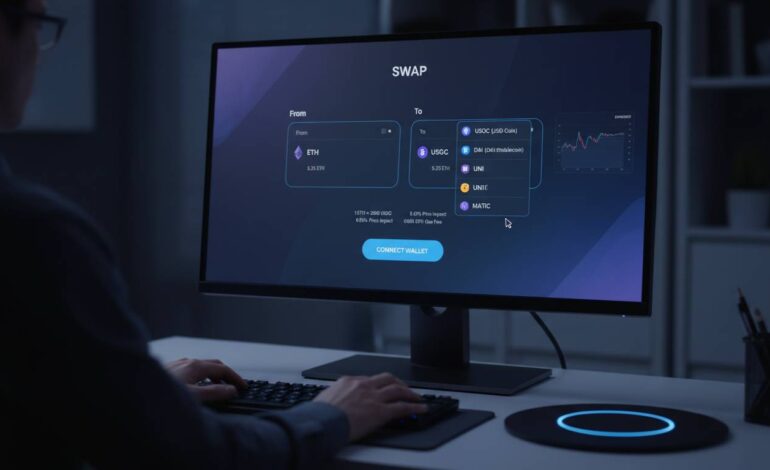
Decentralized exchanges have transformed cryptocurrency trading by eliminating intermediaries and giving users complete control over their assets. For beginners entering the crypto space, choosing the right DEX can mean the difference between a smooth introduction to DeFi and a confusing, potentially costly experience.
Key Insights
– DEX trading volume exceeded $150 billion monthly in 2024, reflecting growing mainstream adoption
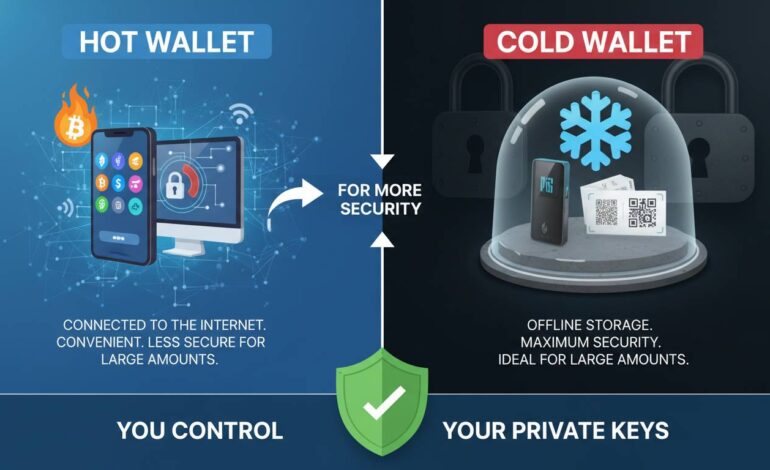
– Unlike centralized exchanges, DEXs enable non-custodial trading where users retain ownership of their private keys
– Top beginner-friendly DEXs process thousands of transactions daily with average fees under $1 for common trades
– Most major DEXs now offer integrated wallets, simplified interfaces, and educational resources specifically designed for new users
This guide examines the best decentralized exchanges for beginners, comparing their features, security measures, fee structures, and ease of use to help you make an informed decision.
What Is a Decentralized Exchange (DEX)?
A decentralized exchange is a peer-to-peer marketplace that facilitates cryptocurrency trades directly between users without intermediary oversight. Unlike centralized exchanges such as Coinbase or Binance, DEXs operate through automated smart contracts—self-executing programs deployed on blockchain networks that automatically enforce trade conditions.
When you trade on a DEX, transactions occur directly from your personal cryptocurrency wallet to the blockchain. The exchange never takes custody of your funds. This fundamental architectural difference provides several advantages: no single point of failure, reduced counterparty risk, greater privacy since no account verification is typically required, and continuous operation independent of traditional market hours.
Most DEXs utilize an automated market maker (AMM) model rather than traditional order books. Instead of matching buy and sell orders, AMMs use liquidity pools—collections of funds locked in smart contracts that provide the capital needed to execute trades. When you swap one token for another, the protocol automatically calculates the exchange rate based on the pool’s asset ratio and current market conditions.
The largest DEXs by trading volume include Uniswap (Ethereum), PancakeSwap (BNB Chain), and Curve Finance, collectively processing billions of dollars in daily volume. Understanding this foundation helps you evaluate which exchange best matches your trading goals and technical comfort level.
Why Choose a DEX Over a Centralized Exchange?
The debate between centralized and decentralized exchanges centers on trade-offs between convenience, control, security, and philosophical alignment with crypto’s foundational principles.
Control and Custody represent the most significant distinction. Centralized exchanges hold your cryptocurrency in their wallets, meaning you technically don’t control your private keys. This creates custodial risk—if the exchange suffers a hack, bankruptcy, or operational failure, you could lose your funds. DEXs eliminate this risk because your assets remain in your wallet throughout the trading process.
Privacy and Verification differ substantially. Most centralized exchanges require identity verification complying with Know Your Customer (KYC) regulations. Many DEXs allow completely anonymous trading, requiring only a cryptocurrency wallet. This appeals to users prioritizing financial privacy.
Accessibility and Hours favor DEXs in some respects. Centralized exchanges can restrict service during maintenance or due to regulatory constraints, while DEXs operate continuously through smart contract automation. Users in regions with limited access to centralized crypto services often find DEXs more accessible.
Learning Curve traditionally favored centralized exchanges for beginners due to their familiar, user-friendly interfaces. However, this gap has narrowed significantly. Modern DEX interfaces now offer intuitive designs, while the complexity of managing private keys and understanding gas fees has decreased through wallet improvements.
Fee Structures present nuanced considerations. Centralized exchanges often charge flat trading fees plus withdrawal costs. DEXs typically charge a percentage of each trade (usually 0.1% to 0.3%) plus network gas fees, which fluctuate based on blockchain congestion.
For beginners, the decision often depends on priorities: if you value maximum control, privacy, and learning about DeFi infrastructure, a DEX provides an essential educational experience. If you prioritize convenience, fiat on-ramps, and customer support, a centralized exchange might serve as your entry point with graduation to DEXs as your expertise develops.
Key Features to Look for in a Beginner-Friendly DEX
Evaluating DEXs requires understanding which features matter most for new users. The ideal beginner-friendly DEX combines accessibility, security, and sufficient functionality to grow with you.
User Interface Design dramatically impacts your experience. The best beginner DEXs feature clean, uncluttered interfaces with clear navigation, visible fee displays before confirming trades, and straightforward token search functions. Complicated interfaces with excessive technical terminology create barriers for newcomers.
Integrated Wallet Connection matters significantly. DEXs that work seamlessly with popular software wallets like MetaMask, Rainbow, or Coinbase Wallet reduce friction. Some DEXs now offer embedded wallets, eliminating the need for browser extensions entirely—a significant simplification for true beginners.
Supported Blockchains and Tokens determine your trading options. Some DEXs operate on a single blockchain, while others aggregate liquidity across multiple networks. Beginners often benefit from starting with DEXs on networks with lower transaction costs, such as BNB Chain or Polygon, before moving to Ethereum mainnet where gas fees can exceed $10-$50 during peak congestion.
Liquidity and Trading Volume affect execution quality. High-liquidity pools ensure your trades execute at expected prices with minimal slippage—the difference between your expected price and actual execution price. Major DEXs like Uniswap consistently deliver better execution than smaller alternatives.
Security Features warrant careful examination. Look for DEXs with audited smart contracts, transparent security histories, and active bug bounty programs. Understanding that smart contract risk exists—vulnerabilities have led to significant losses in DeFi—motivates choosing platforms with strong security track records.
Educational Resources distinguish genuinely beginner-oriented platforms. Some DEXs provide tutorials, explainers, and demo modes that let you practice without risking real funds. These resources accelerate your learning curve considerably.
Fee Transparency ensures you understand costs before trading. The best DEXs display all fees prominently during the transaction confirmation process, including protocol fees, liquidity provider rewards, and estimated network gas costs.
Top Decentralized Exchanges for Beginners in 2024
Each major DEX offers distinct advantages. Here’s a detailed comparison to guide your selection:
| Feature | Uniswap | PancakeSwap | Curve Finance | dYdX |
|---|---|---|---|---|
| Primary Blockchain | Ethereum | BNB Chain | Multi-chain | Ethereum |
| Trading Fee | 0.15%-0.01% | 0.25% | 0.04% | 0.2%-0.5% |
| Best For | Token swaps | Low fees | Stablecoins | Derivatives |
| Difficulty | Beginner | Beginner | Intermediate | Advanced |
| Token | UNI | CAKE | CRV | DYDX |
Uniswap: The Industry Standard
Uniswap dominates the DEX landscape as the most widely used decentralized exchange, commanding significant market share across Ethereum and its layer-2 networks. The platform pioneered the AMM model and continues setting industry standards.
For beginners, Uniswap offers substantial advantages: enormous liquidity ensures excellent trade execution, a straightforward interface that has been refined through multiple iterations, and extensive educational content available through the platform and third-party sources. The V3 iteration introduced concentrated liquidity, allowing advanced users to focus their liquidity for greater efficiency, while beginners can still use standard V2-style swaps.
The UNI governance token provides additional incentive, though this primarily benefits significant liquidity providers rather than casual traders. Gas fees on Ethereum mainnet remain the primary drawback—trading during congested periods can result in $15-$100+ per transaction, making small trades economically impractical.
PancakeSwap: Budget-Friendly Alternative
PancakeSwap operates primarily on BNB Chain, offering dramatically lower transaction costs—typically $0.10-$1.00 per swap compared to Ethereum’s higher fees. This cost advantage makes it particularly attractive for beginners experimenting with small positions or learning trading mechanics.
The platform offers similar functionality to Uniswap: token swaps, liquidity provision, and yield farming opportunities. An integrated lottery, NFT marketplace, and prediction markets provide additional engagement features. The interface closely resembles Uniswap’s design, maintaining familiarity for users who might transition between platforms.
Trading volume on PancakeSwap consistently ranks among the top DEXs globally, indicating strong liquidity despite lower absolute fees. The CAKE token serves governance and staking functions, adding utility for longer-term participants.
Curve Finance: Stablecoin Specialist
Curve Finance specializes in stablecoin trading and Wrapped Bitcoin pairs, making it the preferred DEX for users focused on these assets. The platform’s optimized algorithms for similar-value assets result in extremely low slippage—critical when trading between different versions of the same underlying asset or stablecoins with minimal price deviation.
For beginners not yet ready for volatile token trading, Curve offers a relatively lower-risk introduction to DEX mechanics. The interface remains more technical than Uniswap or PancakeSwap, potentially requiring additional learning. However, the platform’s security record and efficiency for its specific use case make it valuable once you advance beyond basic token swaps.
Additional Notable Mentions
SushiSwap operates across multiple blockchains with similar functionality to Uniswap, featuring the XSWAP aggregator that sources optimal prices across sources. The platform provides generous staking rewards through its SUSHI token.
1inch functions as an aggregator rather than a traditional DEX, scanning multiple DEXs to find the best prices for your trade. This approach maximizes efficiency but adds a layer of abstraction that beginners might find complex initially.
dYdX specializes in perpetual futures and margin trading—products more suitable for experienced traders rather than true beginners. The platform’s Cosmos-based migration has created some uncertainty regarding its future direction.
How to Get Started with Your First DEX
Step-by-step guidance helps you navigate the initial process safely and efficiently.
Step 1: Acquire Cryptocurrency
Before using a DEX, you need crypto in your wallet. Centralized exchanges like Coinbase, Kraken, or Binance allow you to purchase cryptocurrency with fiat currency, then send it to your personal wallet. Purchase a small amount initially to minimize risk while learning.
Step 2: Set Up a Compatible Wallet
MetaMask remains the most widely supported software wallet for DEX interactions. Available as a browser extension and mobile app, MetaMask allows you to create new wallets or import existing ones. Write down your seed phrase—12 or 24 words that restore your wallet—and store it securely offline. Never share this phrase; anyone with it controls your funds.
Step 3: Connect Wallet to DEX
Navigate to your chosen DEX’s website and click “Connect Wallet.” MetaMask will prompt you to confirm the connection. Always verify you’re on the legitimate exchange website—phishing sites impersonating popular DEXs have stolen user funds.
Step 4: Execute Your First Trade
Select the token you want to send (the “Pay” field) and the token you want to receive (the “Get” field). Review the exchange rate and estimated fees carefully before confirming. When ready, click “Swap” and approve the transaction in MetaMask. Wait for blockchain confirmation—Ethereum transactions typically take 15 seconds to several minutes depending on network congestion.
Step 5: Verify Transaction Completion
After confirmation, your received token will appear in your wallet. Use blockchain explorers like Etherscan to verify transaction status and review details if anything appears incorrect.
Common Mistakes to Avoid as a Beginner
New DEX users frequently encounter preventable issues that result in lost funds or unnecessary costs.
Ignoring Slippage Tolerance leads to failed or unexpectedly executed trades. Slippage tolerance represents the maximum price difference you’ll accept. Setting this too low causes transactions to fail during volatile periods; setting it too high allows unfavorable execution. Most users find 0.5%-1% appropriate for stable pairs, while volatile tokens may require 3-5%.
Failing to Verify Token Addresses results in sending funds to incorrect contracts. Scammers create tokens with identical names to popular projects and list them on DEXs. Always verify you’re swapping the correct token by checking the contract address on block explorers like Etherscan or CoinGecko.
Not Accounting for Gas Fees distorts your actual returns or costs. Gas fees fluctuate substantially based on network demand. What costs $5 at 3 AM might cost $50 during peak hours. Timing your trades during lower-activity periods significantly reduces costs.
Sending Crypto to Wrong Networks results in permanent fund loss. Sending BEP-20 tokens (Binance Smart Chain) to an Ethereum address or vice versa typically means your funds become irretrievable. Always double-check network matching between sending and receiving addresses.
Ignoring Impermanent Loss causes unexpected losses when providing liquidity. Liquidity providers earn trading fees but risk impermanent loss—temporary value reduction compared to simply holding tokens. Understand this risk before committing funds to liquidity pools.
Overconfidence with Large Positions invites catastrophic loss. Start with minimal amounts while learning. The decentralized finance space contains sophisticated actors and potential smart contract vulnerabilities; respect the risk by not risking more than you can afford to lose.
Conclusion
Decentralized exchanges represent a fundamental shift in how cryptocurrency trading occurs—eliminating intermediaries while putting you in complete control of your assets. For beginners, the learning curve is real but manageable, especially when starting with user-friendly platforms like Uniswap or PancakeSwap.
Your choice should consider factors within your control: network costs (BNB Chain offers lower fees than Ethereum), your technical comfort level, and the specific assets you want to trade. Starting small, verifying all transactions carefully, and gradually exploring advanced features positions you for success in the DeFi ecosystem.
Remember that decentralized finance evolves rapidly. Protocols update, new competitors emerge, and fee structures change. Stay informed through reliable sources, and don’t hesitate to experiment with small amounts as you develop your understanding. The skills you build navigating DEXs—wallet management, understanding gas fees, evaluating smart contracts—transfer across the broader Web3 landscape.
Frequently Asked Questions
What is the easiest DEX for a beginner to use?
Uniswap and PancakeSwap offer the most intuitive interfaces for beginners. PancakeSwap’s lower transaction fees make it particularly attractive for those learning with smaller amounts, while Uniswap provides experience with the largest, most liquid DEX ecosystem.
Do I need a lot of money to start trading on a DEX?
No, but you should consider gas fees relative to your trade size. On Ethereum, trading less than $100 often becomes uneconomical due to gas costs. BNB Chain or Polygon networks offer more budget-friendly options for smaller positions.
Is it safe to use decentralized exchanges?
DEXs eliminate custodial risk but introduce smart contract risk and user error risk. Using audited protocols, starting with small amounts, double-checking all transaction details, and never sharing your seed phrase significantly reduces danger. No DEX can guarantee security, but major platforms like Uniswap have strong track records.
What wallet do I need to use a DEX?
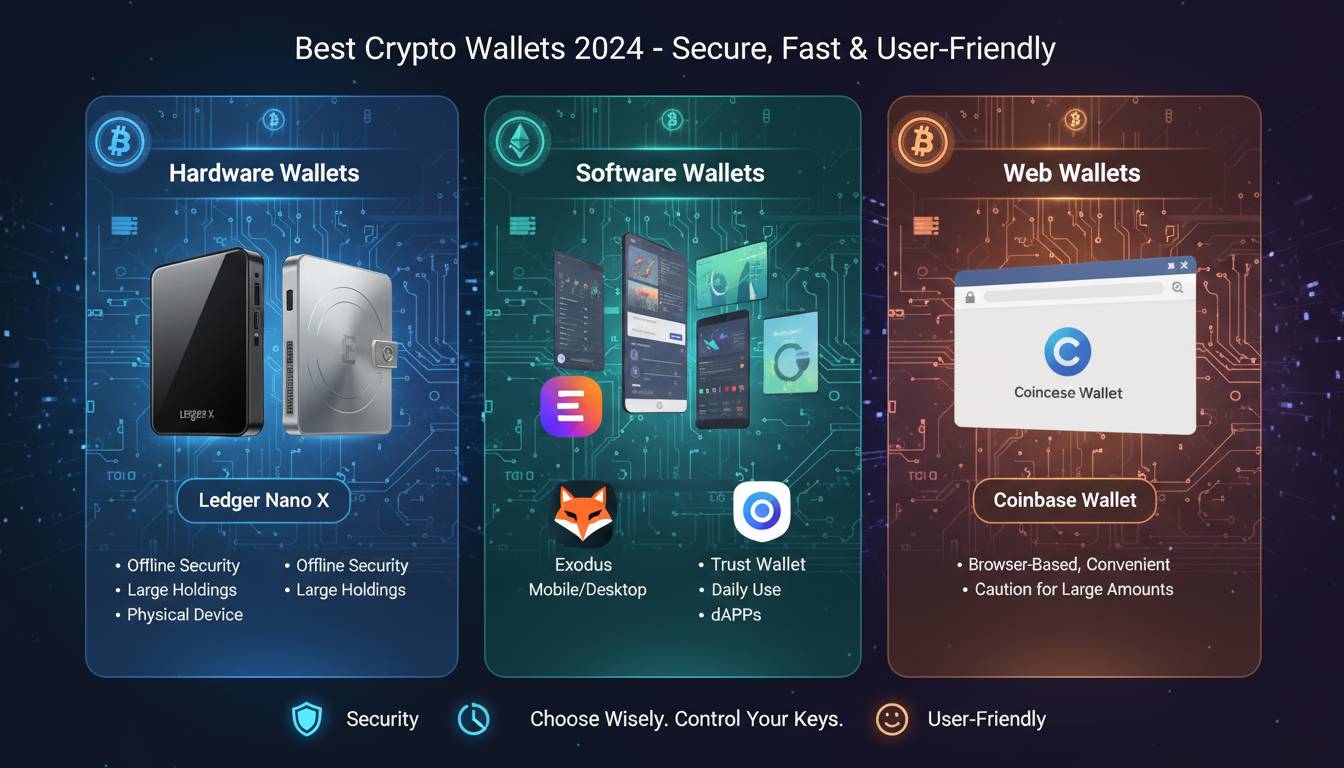
Most DEXs work with MetaMask, which functions as a browser extension and mobile app. Some DEXs like Phantom specialize in specific blockchains (Solana), while others like Rabby offer enhanced features. Hardware wallets like Ledger provide additional security for larger holdings.
Can I lose money providing liquidity to a DEX?
Yes. While liquidity providers earn trading fees, impermanent loss can reduce your holdings’ value compared to simply holding the tokens. This risk is particularly pronounced with volatile token pairs. Understand impermanent loss calculators and only provide liquidity with funds you can afford to lose or lock long-term.
How do DEX fees work?
DEXs charge a percentage of each trade (typically 0.1% to 0.3%), displayed before transaction confirmation. Additionally, network gas fees apply—the cost of processing your transaction on the blockchain. These fees fluctuate based on network demand and vary significantly between blockchains.