Best Crypto Wallet 2024: Top-Rated for Security & Ease

The cryptocurrency market in 2024 is bigger and more complex than ever. With thousands of digital assets now in circulation and threats evolving alongside the industry, choosing the right crypto wallet matters more than ever. This guide breaks down the best crypto wallets available, looking at their security features, supported currencies, fees, and ease of use to help you find what fits your needs.
Our Top Crypto Wallets at a Glance
Here’s a quick look at the standout wallets this year:
Best Overall: Ledger Nano X offers enterprise-grade security with Bluetooth connectivity and supports over 5,500 cryptocurrencies. Best for Beginners: Coinbase Wallet provides intuitive interface design with seamless integration to the Coinbase exchange. Best for Security: Trezor Model T features open-source software and touchscreen display for maximum protection. Best Mobile Wallet: Trust Wallet supports extensive blockchain networks with built-in exchange features. Best Free Wallet: MetaMask remains the standard browser extension wallet for Ethereum and EVM-compatible chains.
Understanding Crypto Wallet Types
Before selecting a wallet, you need to understand the difference between hot wallets and cold wallets. This choice directly impacts your security.
Hot Wallets
Hot wallets stay connected to the internet, giving you quick access to your digital assets. These include browser extensions, mobile apps, and desktop software. The main advantage is accessibility—you can execute transfers within seconds, making hot wallets ideal for active traders. However, this connectivity also creates vulnerability to hacking and online threats.
Popular hot wallets in 2024 include MetaMask, Coinbase Wallet, Trust Wallet, and Exodus.
Cold Wallets
Cold wallets store your private keys on hardware devices that stay offline unless you intentionally connect them for transactions. This isolation dramatically reduces the attack surface for malicious actors.
Hardware wallets from Ledger and Trezor have become the standard for securing significant crypto holdings. They require more careful handling and extra steps for transactions, but the security benefits make them the go-to choice for long-term investors and anyone holding substantial values.
Best Hardware Wallets of 2024
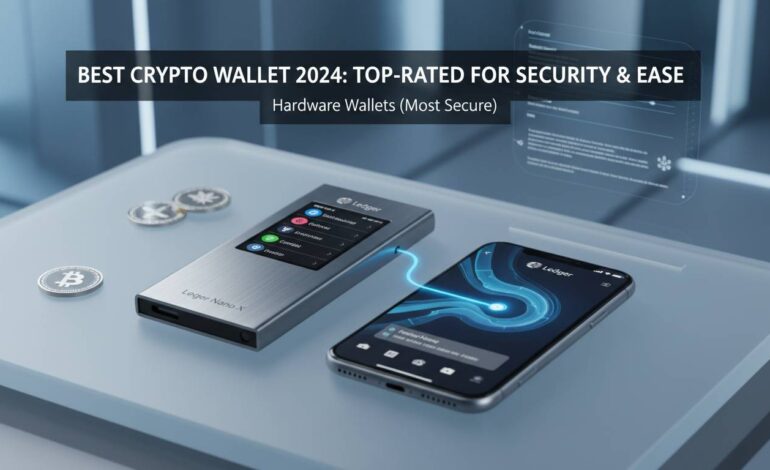
Ledger Nano X
The Ledger Nano X is our top pick for best overall crypto wallet in 2024. This French-designed hardware wallet combines strong security with modern convenience features. The device uses a Certified Secure Element (CC EAL5+) chip—the same technology used in credit cards and passports—to protect private keys from physical and digital attacks.
What sets the Nano X apart from its predecessor, the Nano S Plus, is Bluetooth connectivity, which lets you manage your portfolio directly from the Ledger Live mobile app. The device supports over 5,500 cryptocurrencies and tokens, including Bitcoin, Ethereum, Solana, and countless altcoins. The battery lasts about eight hours of active use, and you can store up to 100 applications simultaneously.
The wallet has a clear OLED display for transaction verification. All transactions require physical confirmation on the device, which prevents remote hacking even when connected to a compromised computer. Ledger releases regular firmware updates to address emerging security threats.
Pros: Exceptional security, extensive coin support, Bluetooth functionality, mobile compatibility. Cons: Premium price at $149, initial setup requires some learning.
Trezor Model T
The Trezor Model T, developed by Czech-based SatoshiLabs, represents one of the best open-source hardware wallet designs available. Unlike closed-source alternatives, the Model T’s firmware code is publicly auditable, letting security researchers identify and report vulnerabilities. This transparency has made Trezor popular among privacy-conscious users and security experts.
The device features a full-color touchscreen, making navigation and transaction confirmation easier than button-based interfaces. The Model T supports over 8,000 coins and tokens, slightly edging out Ledger’s offerings. Its Shamir Backup feature lets users split recovery phrases into multiple shares, providing protection against both device loss and theft.
Pros: Open-source code, intuitive touchscreen, strong privacy features, Shamir Backup. Cons: Higher cost at $199, no Bluetooth connectivity, limited mobile app functionality.
Best Software Wallets of 2024
Coinbase Wallet
Coinbase Wallet is a solid choice for cryptocurrency beginners. Developed by Coinbase, one of the largest regulated cryptocurrency exchanges in the United States, this wallet provides reliable functionality with an interface designed for accessibility.
The wallet integrates seamlessly with the main Coinbase exchange, making transfers between the exchange and wallet simple without complex address copying. It supports Bitcoin, Ethereum, all EVM-compatible networks, and provides access to decentralized applications directly from the wallet interface. The wallet also works with Coinbase’s staking services, letting users earn rewards on eligible assets without leaving the app.
Security features include biometric authentication, cloud backup encryption, and the option to set up a recovery phrase stored using your personal cloud storage credentials. While the wallet is non-custodial—meaning you control your private keys—its development by a regulated exchange adds an extra layer of user trust.
Pros: Beginner-friendly interface, exchange integration, strong customer support, reliable security. Cons: Limited advanced features for power users, some features require a Coinbase account.
MetaMask
MetaMask has become the standard wallet for interacting with the Ethereum ecosystem and the broader world of EVM-compatible blockchains. As a browser extension and mobile app, MetaMask provides instant access to decentralized applications, NFT marketplaces, and DeFi protocols.
The wallet’s popularity comes from its lightweight design and extensive developer ecosystem. Users can easily switch between networks, manage multiple accounts, and interact with smart contracts without technical complexity. MetaMask connects to hardware wallets like Ledger and Trezor, letting users combine hot wallet convenience with cold storage security.
In 2024, MetaMask added swap functionality directly within the wallet, letting users exchange tokens without leaving the application. The wallet supports Ethereum, Arbitrum, Optimism, Polygon, and dozens of other networks, making it essential for users in the multi-chain crypto ecosystem.
Pros: Extensive network support, strong dApp compatibility, hardware wallet integration, active development community. Cons: Past security incidents involving browser extensions, no built-in exchange, phishing vulnerability requires user vigilance.
Trust Wallet
Trust Wallet, acquired by Binance in 2019, has grown into one of the most widely-used mobile cryptocurrency wallets globally. The wallet’s strength is support for over 70 blockchains and thousands of tokens, making it versatile for users with diverse portfolios.
The mobile-first design prioritizes on-the-go access, with built-in staking capabilities letting users earn passive income on PoS assets like Tezos, Cosmos, and Algorand directly from the app. Trust Wallet also includes a decentralized exchange aggregator, enabling token swaps at competitive rates without leaving the wallet.
Security features include biometric authentication, seed phrase backup, and the option to add a custom node for enhanced privacy. The wallet’s built-in Web3 browser gives mobile users access to decentralized applications with the same functionality available on desktop browsers.
Pros: Multi-chain support, built-in exchange, mobile-optimized design, staking rewards. Cons: Centralized ownership raises some privacy concerns, limited desktop functionality.
How to Choose the Right Crypto Wallet
Selecting the right crypto wallet requires thinking through several factors that match your individual needs and risk tolerance.
Assess Your Security Requirements
The value of cryptocurrency you plan to store should directly influence your wallet choice. For holdings under $1,000, a reputable software wallet with good security features usually provides adequate protection. For amounts between $1,000 and $50,000, a hardware wallet becomes worth considering. For holdings over $50,000, hardware wallets combined with additional security measures like multi-signature setups or geographic distribution of recovery phrases represent best practice.
Consider Your Trading Frequency
Active traders executing multiple transactions daily may find hardware wallets impractical due to the physical confirmation requirement for each transaction. In these cases, a software wallet or the hot wallet component of a hardware wallet’s companion app provides the necessary speed. Conversely, investors planning to hold assets for extended periods benefit from the superior security of cold storage.
Evaluate Supported Assets
Not all wallets support all cryptocurrencies. Before committing to a wallet, verify that it supports the specific assets you intend to hold. Ethereum-focused investors may find MetaMask optimal, while those with diverse portfolios spanning multiple blockchains should prioritize wallets like Trust Wallet or hardware solutions with broad coin support.
Review Fee Structures
Most cryptocurrency wallets are free to download and use, but transaction fees vary significantly. Some wallets integrate with decentralized exchange aggregators to find the best rates, while others charge additional service fees on swaps. Understanding these costs prevents unexpected expenses, especially for users who trade or transfer assets frequently.
Frequently Asked Questions
What is the best crypto wallet for beginners in 2024?
Coinbase Wallet stands out as the best option for beginners in 2024. Its integration with the Coinbase exchange platform provides a familiar onboarding experience, while the intuitive interface minimizes the learning curve associated with self-custody. The wallet includes helpful educational content and clear guidance for first-time cryptocurrency users.
Are hardware wallets worth the investment in 2024?
Hardware wallets remain worthwhile for anyone holding more than $1,000 in cryptocurrency. The security they provide against both digital hacking and physical theft significantly outweighs their upfront cost. Given the increasing sophistication of phishing attacks and malware targeting cryptocurrency users, the isolation provided by hardware wallets offers peace of mind that’s hard to match.
Can I use multiple crypto wallets simultaneously?
Yes, using multiple wallets simultaneously is possible and often advisable. Many cryptocurrency users maintain a hardware wallet for long-term storage while using a software wallet for daily transactions and DeFi interactions. This approach, sometimes called “cold storage with hot access,” balances security with convenience.
What happens if I lose my hardware wallet?
If you lose your hardware wallet, you can recover your cryptocurrency using the recovery seed phrase you wrote down during initial setup. This 12 or 24-word phrase generates your private keys, allowing you to restore access on a new device or compatible wallet software. For this reason, storing your recovery phrase securely—preferably in multiple geographically separated locations—is absolutely critical.
Are crypto wallets regulated in the United States?
Non-custodial cryptocurrency wallets are generally not subject to specific federal regulation in the United States, since they don’t hold user funds on behalf of customers. However, wallet providers offering additional services like exchange functionality or staking may fall under existing financial regulations. Custodial wallets offered by regulated exchanges like Coinbase are subject to banking regulations and consumer protection requirements.
How do I transfer crypto between wallets?
To transfer cryptocurrency between wallets, you need the receiving wallet’s public address for the specific blockchain network. Open your sending wallet, select the cryptocurrency and amount, enter the recipient’s address, confirm the network matches on both ends, and approve the transaction. Always double-check addresses before confirming—cryptocurrency transactions cannot be reversed.
Conclusion
Finding the best crypto wallet in 2024 depends on your specific requirements around security, convenience, supported assets, and how often you use your crypto. For maximum security, hardware wallets like the Ledger Nano X and Trezor Model T remain unmatched. For everyday access and DeFi interaction, MetaMask, Coinbase Wallet, and Trust Wallet provide excellent functionality with different strengths.
The cryptocurrency market’s continued growth means wallet technology will keep evolving, with improvements in security, usability, and multi-chain support likely to reshape the landscape. Regardless of which wallet you choose, one principle stays constant: never share your recovery phrase with anyone, and always verify transaction details before confirming. By following these core security practices and selecting a wallet aligned with your needs, you can confidently navigate cryptocurrency self-custody in 2024 and beyond.