Best Crypto Wallet – Secure, Fast & Easy to Use


Choosing the right cryptocurrency wallet matters. With thousands of options ranging from free mobile apps to hardware devices that cost over $200, picking the wrong one can mean losing your funds to hackers or struggling with clunky interfaces every time you want to move money. This guide covers the best wallets available in 2025, comparing security, features, supported coins, and fees.
Understanding Crypto Wallets: Types and How They Work
Crypto wallets don’t actually store your cryptocurrency. They hold your private keys—the cryptographic codes that prove ownership of your digital assets and authorize transactions on the blockchain.
Hot wallets connect to the internet. Mobile apps, browser extensions, and desktop software all fall into this category. They’re convenient for frequent trading but vulnerable to hacking because they’re always online. Popular hot wallets include MetaMask, Coinbase Wallet, and Exodus.
Cold wallets (hardware wallets) store your private keys offline on physical devices. They’re the most secure option since attackers would need physical access to your device to steal keys. Ledger and Trezor are the main players here.
There’s another distinction worth knowing: custodial vs non-custodial. Custodial wallets, offered by exchanges like Coinbase and Binance, hold your keys for you. Convenient, but you don’t truly own your crypto—you’re trusting the exchange. Non-custodial wallets give you full control but require you to handle security yourself.
Top Crypto Wallet Recommendations for 2025
Here’s how the leading options stack up:
| Wallet | Type | Security | Supported Assets | Best For |
|---|---|---|---|---|
| Ledger Nano X | Hardware | Excellent | 5,500+ | Maximum security |
| Trezor Model T | Hardware | Excellent | 1,000+ | Security-first users |
| MetaMask | Browser/Mobile | Good | 500,000+ | DeFi enthusiasts |
| Coinbase Wallet | Mobile | Good | 200,000+ | Beginners |
| Exodus | Mobile/Desktop | Good | 350+ | User experience |
| Trust Wallet | Mobile | Good | 10M+ | Mobile-first users |
Best Overall: Ledger Nano X
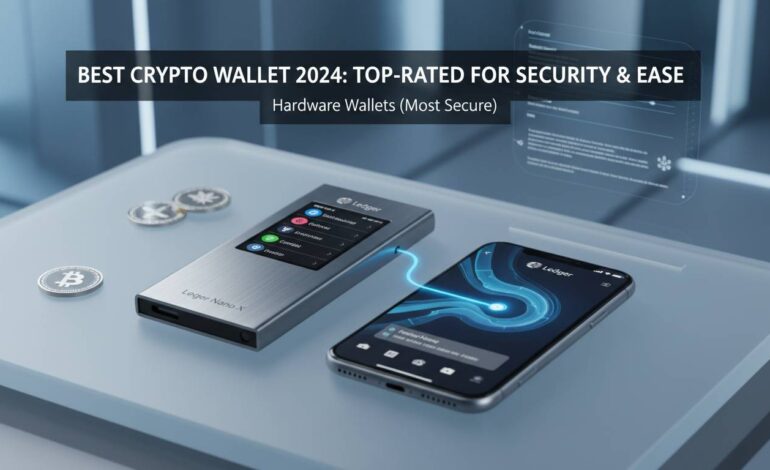
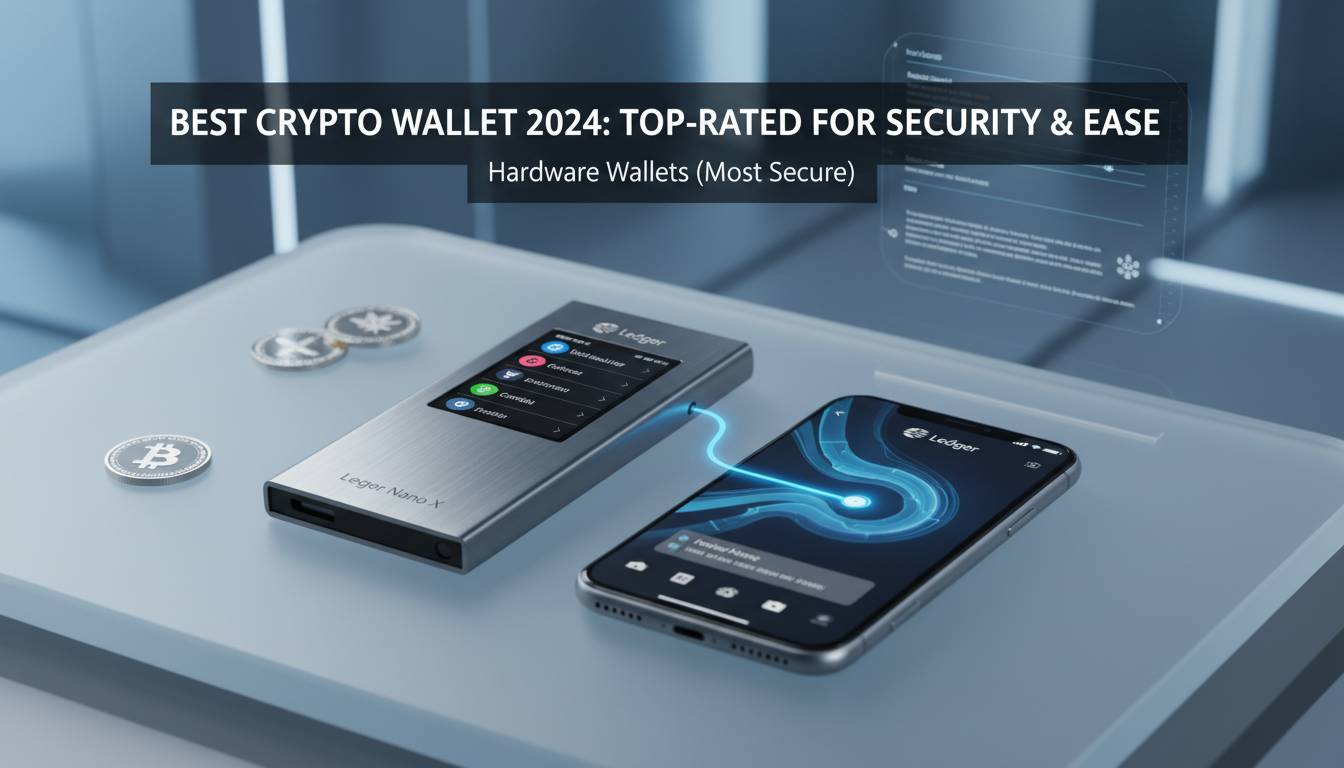
The Ledger Nano X is the best all-around wallet for 2025. It combines solid security with practical usability—a combination many competitors struggle to get right.
The hardware feels premium: stainless steel body, built-in OLED screen, and actual buttons for navigation. You can verify transaction details directly on the device, which is crucial for catching malicious redirect attempts.
Security is the main selling point. The Nano X uses a secure element (SE) chip—the same kind used in credit cards and passports—to store your private keys. Even if your computer gets compromised with malware, attackers still can’t reach your crypto. You also need a PIN to access the device, and you can add an optional passphrase for extra protection.
The wallet supports over 5,500 cryptocurrencies, including Bitcoin, Ethereum, Solana, and just about every altcoin you’ll encounter. Ledger Live, the companion app, handles portfolio management, checking balances, and installing cryptocurrency apps.
Bluetooth support lets you connect to mobile devices without cables. It’s a practical feature if you manage crypto on your phone, though some users still prefer the reliability of a wired connection. Battery life is decent—a few hours of active use between charges.
Best for Beginners: Coinbase Wallet
Coinbase Wallet is the easiest entry point for newcomers. It’s separate from the Coinbase exchange but integrates smoothly with it, making it simple to move money between your exchange account and personal wallet.
Setup takes a few minutes. The app walks you through creating and backing up your seed phrase without jargon overload. Crucially, this is a non-custodial wallet—you control your private keys despite the Coinbase association. That’s a good habit to develop early.
Security features include fingerprint and face recognition, cloud backup, and PIN protection. You can also connect it to a hardware wallet later if your portfolio grows and you want better protection.
Over 200,000 assets are supported. Whatever coin or token you’re curious about, chances are Coinbase Wallet can hold it.
Best for DeFi: MetaMask
MetaMask is the standard for interacting with decentralized finance apps. With over 30 million monthly users, if you’re doing anything with DeFi—yield farming, staking, trading on Uniswap—you’re probably using MetaMask.
The browser extension connects to Ethereum-based dApps with one click. Uniswap, Aave, Compound, Curve—it all works seamlessly. The mobile app brings this functionality to your phone, though the desktop extension experience is smoother.
It’s a hot wallet, which means more risk than hardware options. But you can connect MetaMask to a Ledger or Trezor for signing transactions while keeping keys offline. This hybrid approach works well for serious DeFi users who don’t want to expose their keys but need convenient access to protocols.
MetaMask supports Ethereum, Polygon, Arbitrum, Optimism, and other EVM-compatible chains. One wallet, multiple networks—useful if you explore beyond Ethereum.
Best Mobile Wallet: Exodus
Exodus built its reputation on good design. The mobile app looks polished and actually feels nice to use, which matters when you’re checking your portfolio regularly.
Over 350 cryptocurrencies are supported. The built-in exchange lets you swap between assets without leaving the app—it aggregates rates from different providers to find decent prices. The portfolio view shows clear charts of your holdings in fiat value.
Security includes seed phrase backup, PIN, and biometric authentication. A desktop app exists if you prefer managing from a computer. Customer support gets decent marks, which matters when you’re new and something goes wrong.
Best Hardware Security: Trezor Model T
The Trezor Model T is the most transparent hardware wallet. The entire software stack is open-source—anyone can audit the code. That’s a big deal if you care about verifying security rather than just trusting a company claim.
The color touchscreen makes verifying addresses and amounts straightforward. You confirm everything on the device itself, so there’s no way a compromised computer can trick you into sending to the wrong address.
Over 1,000 cryptocurrencies are supported. Less than Ledger, but it covers the major coins almost everyone holds. Third-party integrations with Exodus and Electrum give you options for how you want to manage your portfolio.
Shamir Backup splits your seed phrase into shares stored in different places. Lose one location and you can still recover. Lose all of them and you’re out of luck—but that’s true of any backup system.
How to Choose the Right Crypto Wallet
Your choice depends on how much crypto you hold, your experience level, and what features matter to you.
Security needs: If you’re holding serious money (a few hundred dollars or more), a hardware wallet is worth the upfront cost. Hot wallets are fine for small amounts while you’re learning.
Supported coins: Major wallets all handle Bitcoin and Ethereum. Altcoin support varies—check before you commit.
User experience: Beginners should prioritize wallets with good support and simple interfaces. Experienced users might want advanced features even if the learning curve is steeper.
Fees: Most hot wallets are free. Hardware wallets cost $79-$250 once. Factor in built-in exchange fees if you plan to swap assets frequently.
Conclusion
The Ledger Nano X offers the best mix of security and convenience for most people. Coinbase Wallet is the friendliest starting point for newcomers. MetaMask is essential if you’re using DeFi.
No wallet protects you from bad habits. Write down your seed phrase and store it safely. Enable security features. Don’t click suspicious links. Do these things and your crypto will be far safer than what happens to most people who lose funds.
Frequently Asked Questions
What is the best crypto wallet for beginners?
Coinbase Wallet. The interface is straightforward, setup takes minutes, and the integration with the Coinbase exchange makes funding your wallet painless. Educational content is built in, helping you learn as you go.
Are hardware wallets worth the investment?
If you hold more than a few hundred dollars in crypto, yes. The one-time cost (typically $79-$249) is cheap insurance against losing everything to a hacked hot wallet or compromised phone.
Can I use one wallet for multiple cryptocurrencies?
Usually, yes. Ledger Nano X handles over 5,500 assets. MetaMask supports hundreds of thousands of tokens across EVM chains. Just verify your specific coins are supported before choosing.
What happens if I lose my crypto wallet?
Your seed phrase restores everything. That 12 or 24-word phrase contains your private keys. Write it down, store it somewhere safe, never share it. Without it, your crypto is gone forever.
Do I need a crypto wallet if I keep my coins on an exchange?
You don’t need one, but it’s riskier. Exchange hacks happen. Keeping crypto on an exchange means you’re a custodial user—you don’t truly own your keys. For amounts you plan to hold long-term, a personal wallet is standard practice.