Best Crypto Wallets 2024 – Secure, Fast & User-Friendly

The cryptocurrency landscape keeps shifting, and picking the right wallet matters more than ever in 2024. Thousands of options exist, each with different features, security setups, and supported coins. Whether you’re just starting out or you’re deep into DeFi, your wallet choice affects both your trading experience and how safe your holdings really are. This guide breaks down the best crypto wallets across different user types, with real details about what actually matters.
Our Top Picks
After testing dozens of wallets for security, supported coins, interface quality, fees, and actual user feedback, here’s what holds up:
- Best Overall: Coinbase Wallet
- Best for DeFi: MetaMask
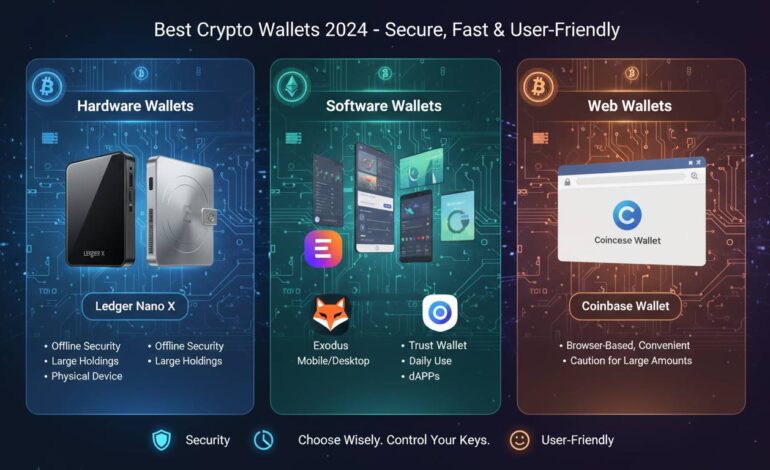
- Best Hardware: Ledger Nano X
- Best Mobile: Trust Wallet
- Best for Beginners: Exodus Wallet
These reflect where things stand in early 2024. Each one shines for specific situations, so the “best” depends on what you actually need.
Best Crypto Wallets for Beginners
Getting into crypto involves a learning curve, and your wallet can either make that easier or harder. The right pick for beginners means simple interfaces, helpful support when things go wrong, and setup that doesn’t require a computer science degree.
Coinbase Wallet works well if you’re also using the Coinbase exchange—you can move money between them without hassle. The setup walks you through things step by step, and it supports the major coins plus plenty of altcoins. Their support team is reachable when you hit a wall, which happens a lot when you’re new.
Exodus Wallet built its name on actually being easy to use. The apps look good and make it simple to see what your portfolio is worth. You can swap coins right inside the wallet instead of hunting around on external exchanges. They offer live chat support 24/7, which new users actually use—and that’s saying something.
Blockchain.com Wallet is another solid choice for mobile-first beginners. The app shows your holdings clearly and walks you through backing up your recovery phrase, which is the one thing new users frequently skip and later regret.
For beginners, prioritize: Is there someone to call when things break? Are fees clear? Does the wallet actually explain what’s happening, or does it assume you already know?
Best Crypto Wallets for DeFi Users
DeFi has changed crypto—now you can lend, borrow, earn interest, and trade without banks getting involved. But doing any of that requires a wallet that plays nice with decentralized apps and multiple chains.
MetaMask is still the DeFi standard. It works as a browser extension and mobile app, connects to Ethereum and chains that work like Ethereum, and gives you access to almost every DeFi protocol out there. You can use it with Uniswap, Aave, Compound, and dozens of others. One heads up: it shows you what permissions you’re giving to smart contracts, but you still need to pay attention. Scams are everywhere in DeFi.
Rabby Wallet came up as a real alternative for people who live in DeFi. It switches networks automatically when you hop between apps, shows you exactly what a transaction will do before you sign it, and suggests ways to save on gas fees. It also pulls all your DeFi positions together in one view, which is handy when you’re spread across protocols.
Keplr Wallet is the pick if you’re messing with the Cosmos ecosystem—Osmosis, Cosmos Hub, and the rest of the IBC chains. Staking is built in, so earning rewards is straightforward. The browser extension makes it easy to use across desktop browsers.
For DeFi, make sure your wallet handles multiple networks, works with a hardware wallet for serious money, and actually shows you transaction details before you commit. The space moves fast, so pick something with an active team.
Best Hardware Wallets for Maximum Security
Hardware wallets are the safest way to hold crypto. They keep your private keys offline in a physical device, which means hackers can’t reach them the way they might with software wallets. If you’re holding real money, you probably need one.
Ledger Nano X stays popular because it works well and supports a huge number of coins—over 5,500. Bluetooth lets you manage things from your phone via the Ledger Live app. Inside there’s a secure element chip that handles the keys, and the Bluetooth connection is encrypted. It’s not cheap, but for serious holders it’s worth it.
Trezor Model T takes a different approach—it’s open source, meaning anyone can look at the code and verify it’s actually secure. The touchscreen makes confirming transactions less fiddly. It also supports Shamir Backup, which splits your recovery phrase into pieces so no single point of failure can wipe you out.
Ellipal Titan goes extreme on isolation. No USB, no Bluetooth—it connects to your phone only through QR codes. That means there’s literally no way for a remote attack to reach your keys. If you’re the paranoid type, this is the one.
When choosing hardware, think about: Does the thing feel well-made? What’s the recovery process like? Is the companion app decent? Have there been security issues in the past? You pay money for these, but they more than earn it if you’re holding significant value.
How to Choose the Right Crypto Wallet
Your needs are specific to you—how much you know, what you’re holding, how often you trade. Here’s what actually matters when you’re deciding.
Security comes first. Does the wallet have two-factor authentication? Biometric options like fingerprint or face ID? How do you recover your money if your phone dies or gets stolen? Hardware wallets are safest but cost money and require you to keep a physical thing safe. Software wallets are easier but more exposed. Multi-signature setups (where multiple people need to approve a transaction) are worth considering for shared funds.
Supported coins vary a lot. Some wallets only work with Ethereum and similar chains. Others handle dozens of networks. If you’re into random altcoins, check the list before you commit. Nothing worse than buying something your wallet can’t hold.
Fees matter more for active traders. Most wallets don’t charge you directly, but network fees change based on how busy the blockchain is. Some wallets help you optimize fees or at least show you what you’ll pay before you confirm.
Interface affects your daily life. Can you quickly see your holdings? Does sending money take five clicks or two? Think about whether you want desktop or mobile, and be honest about your tech comfort level.
Backup and recovery is the thing everyone skips until they need it. You’ll get a 12 or 24-word phrase. Write it down. Put it somewhere safe. Understand how to use it before you need to use it.
Frequently Asked Questions
Which crypto wallet is best for beginners in 2024?
Coinbase Wallet and Exodus Wallet are the strongest choices. Coinbase connects to a major exchange, so moving money is easy and support is decent. Exodus has 24/7 live chat and a built-in exchange, which new users actually find useful when they’re confused.
Are crypto wallets safe?
They use various security measures, but “safe” depends on what you’re comparing. Hardware wallets are the safest because keys never touch the internet. Reputable software wallets encrypt things, use biometrics, and store keys securely on your device. Nothing is 100% foolproof, but following basic practices—strong passwords, 2FA, keeping your recovery phrase offline—goes a long way.
What’s the difference between a hot wallet and a cold wallet?
Hot wallets stay online—convenient for trading often. Software and mobile wallets are hot. Cold wallets stay offline in a device, much safer against hacks. Hardware wallets are the standard cold solution. Many people use both: a hot wallet for spending money and a cold wallet for savings.
How do I transfer cryptocurrency to a wallet?
Open your wallet, hit “receive,” and copy the address (or scan the QR code). Go to your exchange or other wallet, start a withdrawal, paste that address, double-check it matches, and confirm. One typo and your money is gone forever. Take your time.
Can the government take my crypto wallet?
Technically yes, through legal orders. They can freeze exchange accounts, require ID verification from centralized services, or order you to hand over keys. But wallets with strong privacy or hardware wallets stored securely are practically difficult to seize. The laws keep changing, though.
Do I need a crypto wallet if I use an exchange?
Exchanges give you a wallet for money you deposit there, but it’s riskier. Exchanges get hacked, go bankrupt, or freeze accounts for various reasons. Your own wallet means you control the keys—no middleman. If you’re holding for the long term, personal wallets are the move.
Conclusion
Picking a wallet in 2024 comes down to what you actually need and how seriously you take security. The wallets in this guide are the real options that work well for different situations.
Most people start with Coinbase Wallet—it’s straightforward and covers the basics. If you’re doing DeFi, MetaMask is basically required. For serious money, Ledger or Trezor are worth the investment.
Your needs will change. Most experienced crypto users end up with several wallets for different things. Keep up with updates, stay aware of scams, and revisit your setup as the space evolves.