
Best DeFi Staking Platforms: Earn Up to 20% APY in

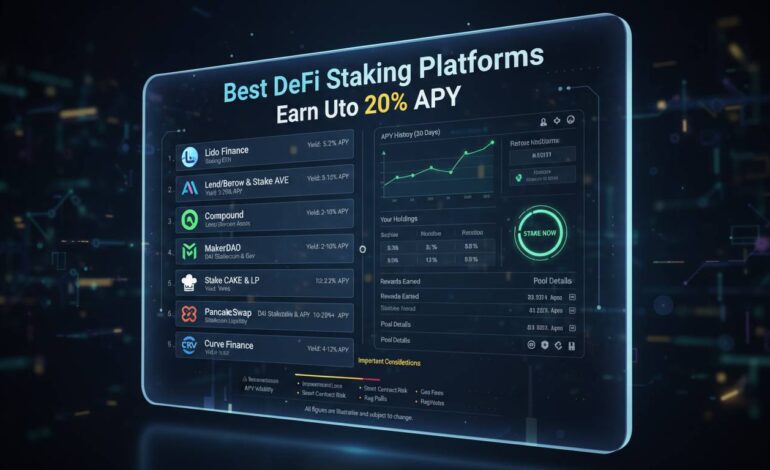
DeFi has changed how crypto holders earn passive income, and staking has become one of the most popular ways to generate returns. With staking, you lock your digital assets in blockchain networks to support operations like transaction validation and consensus, earning rewards in return. Dozens of platforms compete for users, so understanding which ones offer the best mix of security, yields, and accessibility matters—whether you’re new to crypto or have been around for a while.
This guide looks at the leading DeFi staking platforms, evaluates their key features, and gives you actionable insights to help you decide where to put your assets. Whether you’re staking Ethereum, Solana, or other proof-of-stake cryptocurrencies, here’s what you need to know.
Understanding DeFi Staking: How It Works
DeFi staking works differently than a traditional savings account. When you stake tokens, you commit them as collateral to support the network. In return, you get staking rewards, usually paid in the same or a related cryptocurrency.
The mechanics vary across blockchains, but the basic idea is the same. Proof-of-stake blockchains require validators to lock up cryptocurrency to verify transactions. Individual stakers who don’t meet the minimum requirements can pool their resources through staking platforms, combining their holdings to hit the threshold and share the rewards.
Liquid staking has become huge in DeFi. It lets you stake your assets while getting a liquid token that represents your staked position. This means you can still use that token in other DeFi activities—lending, trading, whatever—while your original assets stay staked. This flexibility has driven a lot of adoption.
Key Factors When Evaluating DeFi Staking Platforms
Choosing the right platform means thinking about several things that affect your returns and your risk. Here’s what actually matters.
Security and Trust: This should be your starting point. Look for platforms with clean security records, regular audits, and transparent operations. Older platforms with proven track records generally present lower risk than brand-new alternatives.
Yield Structure and Transparency: High yields sound great, but you need to understand where they come from. Sustainable rewards come from network inflation and transaction fees. Unusually high promised returns often signal unsustainable models or hidden risks. Reputable platforms explain how rewards work and show historical data.
Lock-Up Periods and Flexibility: Some platforms let you withdraw anytime. Others lock your funds for days or months. Think about whether you might need access to your money before choosing.
Minimum Requirements: Platforms have different minimums. Some take small amounts, making them accessible to regular investors. Others target institutions or big players. Pick one that matches what you have to work with.
Leading DeFi Staking Platforms
Several platforms have established themselves as go-to options through consistent performance, decent security, and workable interfaces. Rates and offerings change, but these have stood out.
Lido Finance dominates liquid staking, especially for Ethereum. You stake ETH and get stETH tokens you can use across DeFi—earn staking rewards while staying liquid enough to do other things. Their validator network is decentralized enough, and they’ve been around long enough that many people trust them with their ETH.
Rocket Pool is another Ethereum option with a more decentralized approach. You can run your own validator with less ETH than you’d need elsewhere, which helps the network stay decentralized. The rewards are competitive.
Coinbase Staking is the easy button. You already have an account there, you click a few things, and your tokens start earning. Less technical hassle, but you’re trusting Coinbase with your keys.
Kraken does similar staking across various proof-of-stake coins. Their reputation and regulatory compliance appeal to people who want security and convenience without dealing with smart contracts directly.
Staked.us and Stakewise focus on institutional clients who need professional handling and compliance reporting.
Comparing Platform Features
Here’s the real trade-off: centralized platforms like Coinbase and Kraken are easier to use, have customer support, and don’t require you to understand smart contracts. But you’re trusting them with your private keys and taking on counterparty risk. Decentralized platforms like Lido and Rocket Pool give you more control and transparency, but you need to handle your own security and deal with the technical side.
| Platform Type | Primary Advantage | Main Trade-off |
|---|---|---|
| Liquid Staking Protocols | Stay liquid while earning | Smart contract risk |
| Centralized Exchanges | Easy, support available | Counterparty risk |
| Decentralized Platforms | More control | Technical knowledge needed |
| Institutional Services | Professional handling | Higher minimums |
Pick what matches your comfort level.
Risks and Considerations
Staking isn’t free money. Here’s what can go wrong.
Smart contract bugs are probably the biggest risk in DeFi. Even major platforms with multiple audits sometimes find vulnerabilities. If that happens, you could lose everything.
Impermanent loss hits liquid staking users when the value relationship between your staked asset and the liquid token drifts from where it started. It varies by platform and network conditions, but it’s something to understand before you commit.
Regulatory stuff keeps evolving. Staking services might face new rules that change how accessible they are or how your rewards get taxed. Keep an eye on what’s happening in your country.
Network-level risks—forks, upgrades, major disruptions—can temporarily affect your rewards or ability to access your funds. Using multiple platforms and networks helps spread this risk.
How to Get Started
Here’s how to actually do it.
First, research platforms that support the cryptocurrency you want to stake. Check if they operate where you live and meet your security standards. Maybe create accounts on a couple platforms to compare them before committing real money.
Start with a small test amount. Figure out the interface, see how rewards get distributed, make sure you’re comfortable before you put significant capital in.
Enable two-factor authentication everywhere. Use a hardware wallet for anything substantial. When your assets are earning returns, they become targets.
Keep records for taxes. Staking rewards are usually taxable income. A tax pro who knows crypto can help you get it right.
Frequently Asked Questions
Is DeFi staking profitable?
It can be. Many platforms offer APYs that beat traditional savings accounts. But it depends on what you’re staking, which platform you pick, and market conditions. Returns aren’t guaranteed—token prices move, yields change, and you can lose money if the token drops.
What crypto should I stake?
Depends on your risk tolerance and goals. Ethereum is popular because it’s big and has a solid DeFi ecosystem. Solana, Cardano, and Polygon are other options with different yield structures and risk profiles. Do your own research on each.
Is staking safer than yield farming?
Staking is simpler and generally lower-risk than yield farming, which often involves juggling multiple DeFi protocols and complex strategies. Both carry significant risk though. Nothing in DeFi is risk-free.
How do I start?
Buy the crypto you want to stake on a reputable exchange. Move it to a wallet that works with your chosen platform. Connect to the platform, delegate to validators, and understand any lock-up periods before you confirm.
What happens during blockchain upgrades?
Your staked tokens usually stay secure and keep earning. Major upgrades like Ethereum’s proof-of-stake transition went smoothly on established platforms—most users didn’t notice anything.
Can I lose money?
Yes. Smart contract failures, big token price drops, impermanent loss, and platform shutdowns can all result in losses. Research before you stake and don’t put all your eggs in one basket.