How to Earn Passive Income with Cryptocurrency: Simple Guide


The cryptocurrency landscape has evolved dramatically beyond simple buying and holding. In 2024, millions of investors are generating passive income through their digital assets—but success requires understanding the mechanics, risks, and strategies that actually work.
This guide breaks down proven methods to earn passive income with cryptocurrency, from staking rewards to lending protocols, with practical insights you can apply today.
Understanding Crypto Passive Income in 2024
Passive income in cryptocurrency refers to earning rewards on your holdings without actively trading. Unlike traditional savings accounts offering 0.01% APY, crypto passive income opportunities can yield anywhere from 3% to 15% annually, though with significantly higher risk.
The market has matured substantially since the 2020-2021 boom. Regulatory clarity has improved in the United States following SEC guidance on staking and lending products, while institutional players like BlackRock have entered the space with spot Bitcoin ETFs. This institutional adoption has created more stable yield opportunities while simultaneously attracting bad actors—so diligence matters more than ever.
The fundamental principle remains consistent across methods: you’re providing value to blockchain networks or other users (validation, liquidity, capital), and you’re compensated for that contribution. Understanding what provides that value and where the risks lie separates successful passive income strategies from costly mistakes.
Staking: Locking Assets for Network Rewards
Staking represents the most accessible passive income method for most cryptocurrency holders. When you stake, you lock your tokens in a wallet to support a proof-of-stake blockchain’s operations—validating transactions and securing the network. In return, you earn additional tokens as rewards.
Ethereum (ETH) Staking dominates this category. Following Ethereum’s transition to proof-of-stake in September 2022, the network now supports native staking with current yields around 3-5% annually. The minimum requirement is 32 ETH (approximately $80,000 at current prices), but liquid staking tokens like Lido’s stETH allow smaller investors to participate. Ethereum’s staking yield fluctuates based on total staked amount and network activity—more validators means slightly lower individual rewards, but also a more secure network.
Cardano (ADA) offers one of the more accessible staking ecosystems. With no minimum lock-up, you can stake any amount of ADA through wallets like Daedalus or Yoroi. Rewards typically range from 4-6% APY, paid directly to your wallet every epoch (5 days). The process is fully non-custodial—your keys, your coins.
Polkadot (DOT) uses a nomination system where you delegate your stake to validators. Typical yields fall between 7-12% APY, though these rates have decreased as more tokens are staked. The parachain auction system adds additional earning opportunities through crowdloans, though this involves locking tokens for longer periods.
Practical consideration: Staking rewards are treated as income by the IRS, and failing to report can trigger audits. Keep detailed records of your staking rewards in USD value at the time of receipt.
Yield Farming and Liquidity Mining
Yield farming involves providing liquidity to decentralized exchanges (DEXs) or lending protocols in exchange for protocol tokens or a share of transaction fees. This method typically offers higher returns than staking but also carries greater complexity and risk.
Uniswap, the largest DEX by volume, allows liquidity providers to earn 0.3% of each swap fees proportional to their share of the pool. If a pool processes $1 billion in daily volume, that 0.3% distributes across providers. However, impermanent loss remains a critical risk—when token prices diverge significantly, you may lose more than you earn in fees.
Concentrated liquidity (introduced by Uniswap V3) allows providers to focus their capital within specific price ranges, dramatically increasing fee earnings—but also increasing impermanent loss risk. This strategy suits experienced users comfortable with active management.
Curve Finance specializes in stablecoin and wrapped asset swaps, offering lower impermanent loss compared to volatile pairs. The CRV token rewards liquidity providers, with governance tokens often adding 10-20% additional yield on top of swap fees.
Aave and Compound represent the lending protocol category. You deposit cryptocurrencies as collateral, borrowers pay interest, and you earn a share of that interest. Rates vary based on asset and demand—stablecoins like USDC typically offer 4-8%, while volatile assets offer less due to liquidation risk considerations.
Crypto Lending Platforms
Centralized lending platforms like Nexo, BlockFi (now Gemini in some regions), and Celsius (now in bankruptcy proceedings—avoid) offer straightforward passive income. You deposit crypto, the platform lends it to borrowers or institutional players, and you receive interest payments.
Nexo currently offers up to 12% APY on certain stablecoins, though rates fluctuate. The platform provides insurance on assets and offers instant credit lines. However, unlike decentralized protocols, you’re exposed to counterparty risk—the platform’s solvency directly affects your funds.
Ledn has positioned itself as a more conservative option, focusing on Bitcoin-backed loans and savings with transparency around reserves. Their B2X product allows Bitcoin holders to access credit while maintaining exposure.
Key risk: Centralized platforms are not banks. They lack FDIC insurance and operate with less regulatory oversight. The collapse of Celsius, Three Arrows Capital, and FTX’s lending arm demonstrated that centralized yield products can fail catastrophically. If using centralized platforms, limit exposure to what you can afford to lose entirely.
Dividend-Paying Tokens and Staking Derivatives
Certain tokens distribute profits or revenue to holders—a model more familiar to traditional stock investors.
Helium (HNT) rewards validators for building wireless infrastructure. Hotspot operators earn HNT by providing network coverage, though this requires hardware investment. The token also features a simple “stake-to-unlock” model for early participants.
VeChain (VET) uses a “VeStake” mechanism where locked VET generates VTHO, the network’s transaction fuel. This VTHO can be used for transactions or sold. Long-term holders benefit from both token appreciation and consistent VTHO generation.
Theta Network rewards token holders through theta fuel burning and validator rewards. The video streaming platform has partnerships with Google, Sony, and Warner Bros, adding credibility to the passive income model.
Polygon (MATIC) introduced a staking upgrade allowing MATIC holders to earn a share of sequencer fees—a significant shift toward sustainable, revenue-backed yields rather than inflationary token rewards.
Masternodes: Advanced Passive Income
Masternodes represent a more technical passive income approach requiring substantial capital and technical setup. These nodes perform specialized functions like instant transactions, privacy features, or governance voting.
Dash (DASH) popularized the masternode model. Running a Dash masternode requires 1,000 DASH (approximately $30,000) and provides 5-7% annual returns plus voting rights on treasury funding. The setup requires technical knowledge—improper configuration can result in lost funds.
Chainlink (LINK) and Ethereum Classic (ETC) have explored masternode-like systems, though neither uses the exact terminology. The general principle remains: you provide infrastructure, you earn rewards.
Practical consideration: Masternode hosting can be outsourced through services like Nodeasy or Staked, though this introduces third-party risk. Only pursue masternodes if you have technical competency or are willing to pay premium fees for managed services.
Risk Management: Protecting Your Principal
Passive income strategies only matter if your principal remains intact. The crypto space has eliminated more portfolios than any bull market has created.
Smart contract risk represents the most technical danger. Even audited protocols can contain vulnerabilities—the Wormhole bridge hack ($320 million lost) and the Ronin bridge attack ($625 million) demonstrate that even major projects fail. Spread your capital across multiple protocols rather than concentrating in one.
Regulatory risk has intensified following the SEC’s enforcement actions against staking-as-a-service products.Kraken’s $30 million settlement in February 2023 highlighted that the SEC views many staking products as securities. While this primarily affects centralized services, decentralized protocols face ongoing scrutiny.
Impermanent loss affects all liquidity providers. Use calculators (available from websites like PoolTool or liquidity calculator tools) to understand potential losses before providing liquidity to volatile pairs. Stablecoin pairs minimize this risk significantly.
Custodial risk applies when using centralized platforms. Withdraw your earnings to personal wallets regularly. The golden rule: not your keys, not your crypto.
Diversification across methods—staking for safety, lending for yield, farming for growth—balances risk while maintaining income streams. No single strategy should represent more than 20-30% of your total crypto portfolio.
Getting Started: Practical First Steps
Beginning your passive income journey requires a methodical approach rather than chasing the highest yields.
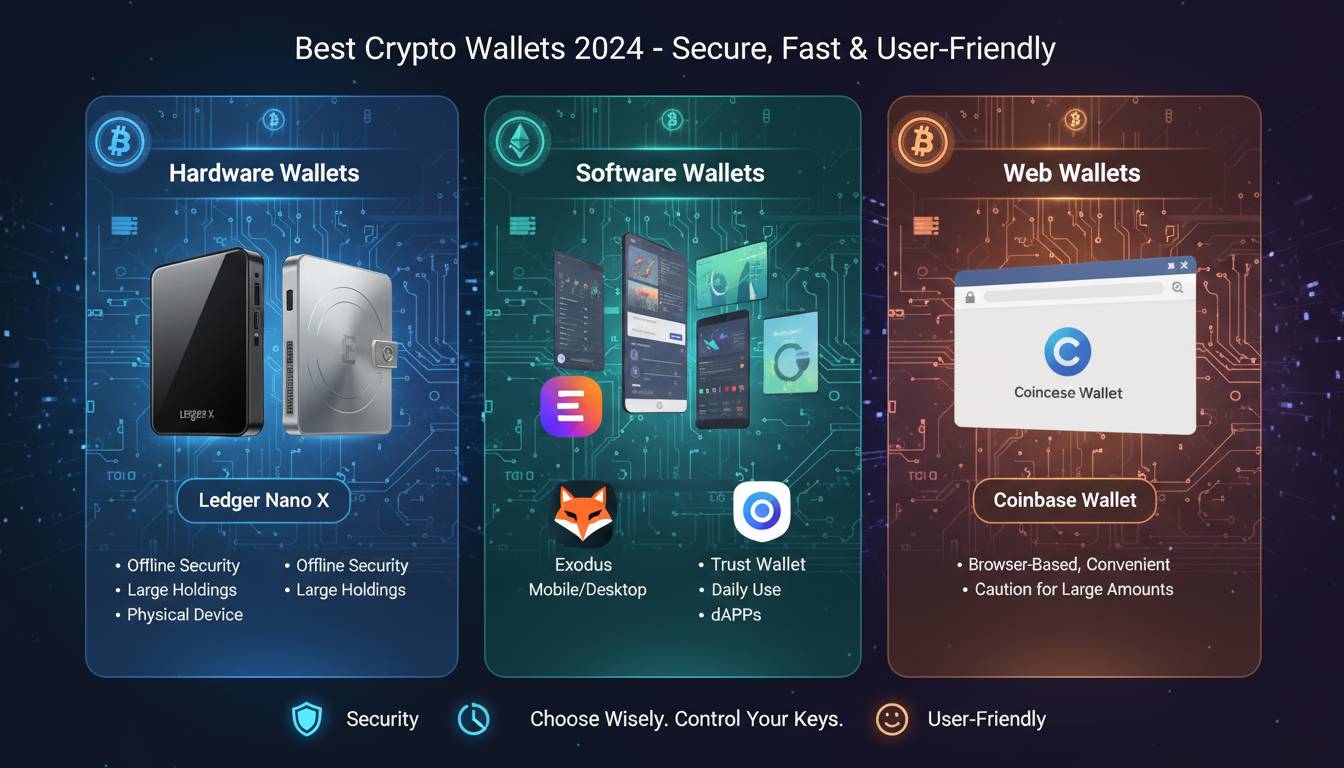
Step 1: Secure your assets. Hardware wallets (Ledger, Trezor) are non-negotiable for meaningful holdings. Without proper security, you’re not earning passive income—you’re accumulating risk.
Step 2: Start with staking. Ethereum through a liquid staking token provides the best combination of accessibility, yield, and security. Lido, Rocket Pool, and Frax Finance all offer audited, battle-tested products.
Step 3: Expand to lending. Aave offers the best combination of transparency and yield for decentralized lending. Start with stablecoins where you understand the collateral requirements.
Step 4: Allocate risk capital to yield farming. This should be money you’re comfortable losing entirely—perhaps 10% of your crypto portfolio. Focus on stablecoin pools to minimize impermanent loss.
Step 5: Track everything. Crypto tax software (CoinTracker, Koinly) integrates with major exchanges and protocols, making tax reporting manageable.
Frequently Asked Questions
Q: How much can I realistically earn from crypto passive income?
Realistic annual yields range from 3-8% for low-risk options like Ethereum staking or stablecoin lending. Higher yields (10%+) typically require accepting substantial risk through concentrated liquidity positions or newer, unaudited protocols. Be skeptical of anything claiming 20%+ sustained yields—they usually involve unsustainable token inflation or fraud.
Q: Is crypto passive income taxable?
Yes. In the United States, the IRS treats staking rewards and lending interest as ordinary income at your marginal tax rate. Additionally, every time you sell, trade, or dispose of crypto (including harvesting yield tokens), you may realize capital gains or losses. Keep detailed records of every transaction, including the USD value at the time of receipt.
Q: What’s the difference between staking and yield farming?
Staking involves locking tokens to support blockchain operations (validation, security) and earning inflationary rewards or fees. Yield farming involves providing liquidity to DeFi protocols and earning a share of trading fees or additional tokens. Staking is generally lower-risk but lower-reward; farming offers higher returns but introduces impermanent loss and smart contract risk.
Q: Can I lose money with these strategies?
Absolutely. Crypto passive income is not risk-free. You can lose money through smart contract hacks, rug pulls (when developers abandon projects after collecting investor funds), impermanent loss, regulatory enforcement, or platform insolvency. Never invest more than you can afford to lose entirely.
Q: Do I need a large amount of crypto to start?
No. Many staking options have no minimum—Cardano and Algorand allow staking any amount. Decentralized lending protocols like Aave accept any size deposits. However, gas fees on networks like Ethereum can eat into small positions—consider layer-2 networks (Polygon, Arbitrum, Optimism) for smaller portfolios.
Q: Are these strategies safe in a bear market?
Passive income strategies performed poorly during 2022’s crypto crash. Token prices dropped while rewards often declined, and many lending platforms failed. In bear markets, prioritize staking over lending, avoid leverage, and consider reducing exposure to riskier yield opportunities. The survival of your principal matters more than maximizing yield during market downturns.
Conclusion
Earning passive income with cryptocurrency in 2024 requires balancing yield against risk—a calculus that shifts as the market evolves. The most sustainable approach combines multiple strategies: staking established proof-of-stake coins for baseline returns, providing stablecoin liquidity for additional yield, and limiting exposure to higher-risk opportunities.
Start with what you understand. Ethereum staking through liquid staking tokens offers the best entry point for most investors—accessible, relatively secure, and producing consistent yields. From there, expand based on your risk tolerance and technical comfort.
Remember: in cryptocurrency, if a yield sounds too good to be true, it probably is. The best passive income strategies aren’t the flashiest—they’re the boring ones that survive multiple market cycles. Protect your principal first, generate returns second, and always keep detailed tax records.
This article is for educational purposes only and does not constitute financial advice. Cryptocurrency investments carry substantial risk, including potential total loss of capital. Consult with licensed financial professionals before making investment decisions.