How to Secure Your Cryptocurrency Holdings Like a Pro

The cryptocurrency landscape has transformed dramatically over the past decade, with global crypto adoption exceeding 420 million users worldwide as of 2024. Yet for all the wealth creation opportunities, security remains the single greatest barrier to mainstream adoption. Over $3.8 billion was lost to cryptocurrency hacks and fraud in 2022 alone, according to Chainalysis data, and 2023 saw losses exceeding $1.8 billion despite improved security measures across the industry. These aren’t just statistics—they represent real people who lost life-changing savings to preventable security failures.
Securing cryptocurrency holdings isn’t optional or reserved for large institutional investors. Every holder, whether you’re holding $100 or $1 million in digital assets, represents a potential target. The difference between keeping your holdings safe and becoming another cautionary tale often comes down to understanding the right security principles and implementing them consistently.
This guide walks you through every critical aspect of cryptocurrency security—from understanding the fundamental differences between wallet types to implementing advanced cold storage strategies used by professional asset managers. You’ll learn not just what to do, but why each security measure matters, so you can make informed decisions that protect your specific situation.
The Current Threat Landscape: Why Security Matters Now
Understanding what you’re protecting against is the foundation of effective security. The threat landscape in cryptocurrency differs fundamentally from traditional finance, and recognizing these differences shapes everything else you do.
Direct Targeting of Individuals
Unlike bank accounts protected by regulatory protections and insurance, cryptocurrency transactions are irreversible. Once funds leave your wallet through a scam or unauthorized access, recovery is nearly impossible. This creates powerful incentives for attackers to target individuals directly rather than attempting to breach exchanges with sophisticated security systems.
Phishing attacks have grown exponentially more sophisticated. Attackers now create convincing replicas of legitimate exchanges, wallets, and even DeFi protocols. They employ social engineering through fake customer support accounts, compromising legitimate websites with malicious code, and using targeted information gathered from social media to create personalized attacks.
Key Threat Vectors
| Threat Type | Description | Impact |
|---|---|---|
| Phishing | Fake websites, emails, or messages stealing login credentials | Complete wallet drain |
| Malware | Keyloggers, clipboard swappers, wallet drainers | Credential and fund theft |
| SIM Swapping | Hijacking phone numbers to bypass 2FA | Account takeover |
| Rug Pulls | Developers abandon fraudulent projects | Total loss of investment |
| Exchange Hacks | Breaches of centralized platforms | Potential fund loss |
The rise of DeFi has introduced additional attack surfaces. Smart contract vulnerabilities, oracle manipulation, and flash loan attacks have collectively stolen billions in crypto assets. Even users who never interact with DeFi protocols face risks when attackers compromise the infrastructure they use.
Who Is Most at Risk?
Beginners often fall victim to the simplest attacks—fake exchanges promising unrealistic returns, phishing emails claiming account issues, or Ponzi schemes disguised as yield farms. However, experienced holders aren’t immune. Many sophisticated hacks target people who have demonstrated significant crypto holdings through social media, conference attendance, or public blockchain activity.
Understanding Cryptocurrency Security Fundamentals
Before examining specific tools and strategies, you need to understand how cryptocurrency ownership actually works. This knowledge prevents fundamental mistakes that compromise security.
Private Keys: The Only Thing That Matters
In cryptocurrency, your holdings aren’t stored in an account or wallet—they’re recorded on the blockchain, accessible only through your private key. This cryptographic key is essentially a password that allows you to sign transactions and transfer funds. Whoever controls the private key controls the associated cryptocurrency.
This fundamental truth has critical implications: losing your private key means losing access to your funds permanently. No password reset, no customer support, no recovery process. Conversely, anyone who obtains your private key can transfer your entire balance instantly.
Hot Wallets vs. Cold Wallets
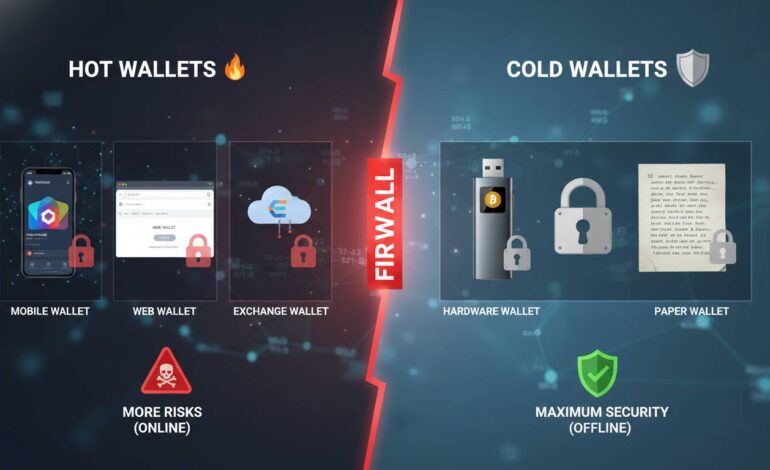
The distinction between hot and cold wallets determines most of your security decisions. Hot wallets remain connected to the internet—mobile apps, browser extensions, and exchange accounts. Cold wallets remain permanently offline—hardware devices stored securely or paper wallets generated offline.
Hot wallets offer convenience for frequent trading and transactions. Cold wallets provide protection against online attacks. Most security-conscious holders use a combination: keeping smaller amounts needed for regular activities in hot wallets while storing the majority of holdings in cold storage.
Seed Phrases: Your Ultimate Recovery Mechanism
Most modern wallets generate a 12 or 24-word seed phrase during setup. This phrase can recreate your private key entirely, making it essential for both backup and recovery. The security of your seed phrase is therefore the security of your entire portfolio.
Seed phrases should be written down and stored in multiple secure locations. Never store them digitally—computer viruses, cloud syncing vulnerabilities, and hacking can expose digital copies. Professional security practices involve dividing seed phrases into parts stored in separate secure locations, requiring multiple fragments to reconstruct the full phrase.
Hardware Wallets: The Gold Standard
Hardware wallets provide the strongest security for most cryptocurrency holders. These specialized devices store private keys offline while allowing secure transaction signing. Even if your computer is compromised with malware, the private key never leaves the hardware device.
How Hardware Wallets Work
A hardware wallet is essentially a small computer designed for a single purpose: securely creating and storing private keys. When you need to sign a transaction, your computer sends the transaction details to the device. The hardware wallet displays the transaction details on its own screen, you confirm on the device, and the device returns only the signed transaction—not the private key itself.
This architecture means your private keys never touch an internet-connected device. Even computers riddled with malware cannot extract the keys from a properly functioning hardware wallet.
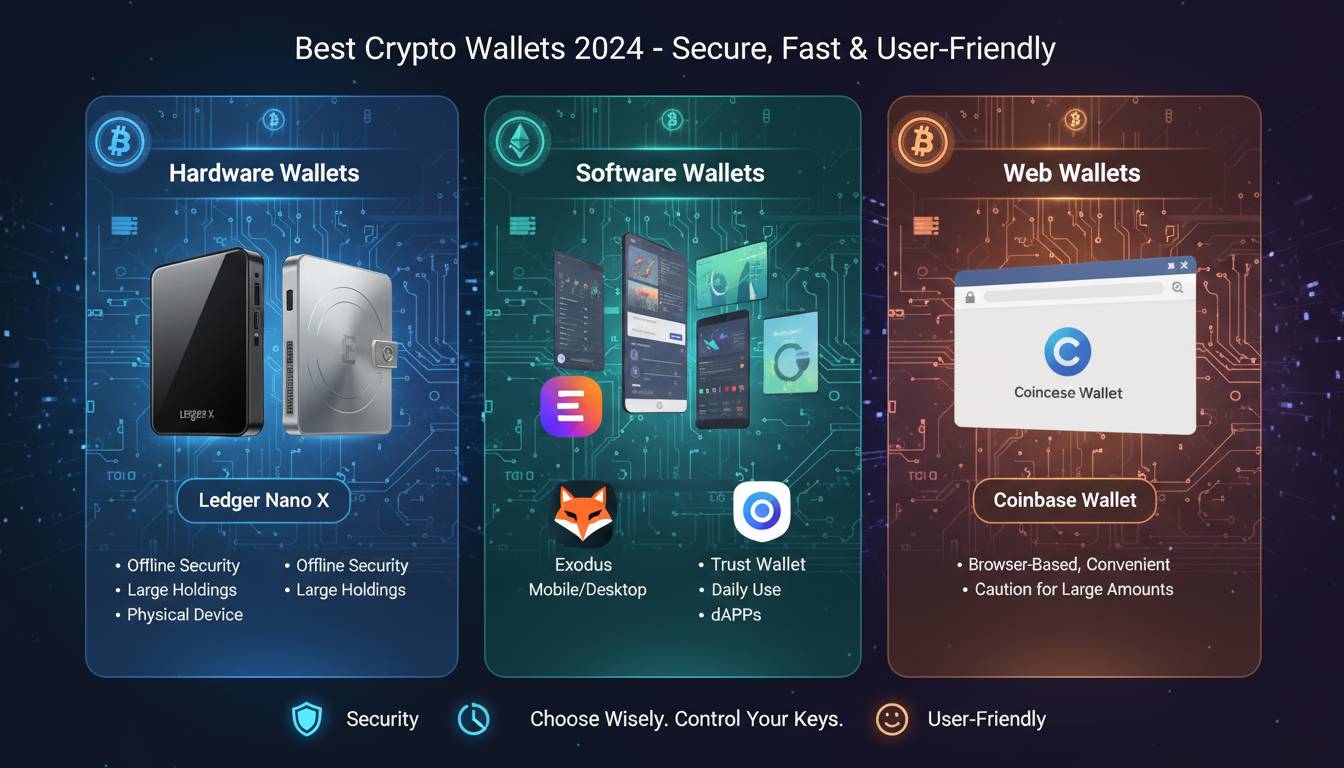
Popular Hardware Wallet Options
| Wallet | Price | Key Features | Best For |
|---|---|---|---|
| Ledger Nano X | $149 | Bluetooth, mobile support, 100+ apps | Mobile users, multiple assets |
| Trezor Model T | $239 | Touchscreen, open-source, SD card | Maximum transparency, advanced users |
| Ledger Nano S Plus | $79 | Compact, extensive asset support | Budget-conscious users |
| Trezor Model One | $69 | Entry-level, open-source | Beginners, basic needs |
Choosing the Right Hardware Wallet
Open-source wallets like Trezor allow security researchers to verify the code, potentially identifying vulnerabilities before attackers can exploit them. Closed-source options like Ledger often offer broader asset support and additional features, but require trusting the manufacturer’s security claims.
For most users, the difference between reputable hardware wallets comes down to features rather than fundamental security. Both Ledger and Trezor have strong security track records. The most important factor is purchasing directly from the manufacturer—buying used devices or from third-party sellers introduces supply chain attack risks.
Software Wallets: Balancing Convenience and Security
Software wallets provide essential functionality for active traders and those needing regular access to their funds. Understanding their security characteristics allows you to use them appropriately without excessive risk.
Mobile Wallets
Modern mobile wallets offer surprisingly robust security features. Leading options include multi-signature support, biometric authentication, and integration with hardware wallets for key storage. Devices with secure enclaves—specialized hardware that stores cryptographic keys separately from the main processor—provide hardware-level protection against many attacks.
The primary vulnerability with mobile wallets remains the device itself. If your phone is compromised with malware, keyloggers can capture PINs or seed phrases as you enter them. Regularly updating your phone’s operating system, avoiding sideloaded applications, and using reputable app stores significantly reduce this risk.
Browser Extensions and Web Wallets
Browser-based wallets offer convenience but face greater attack surfaces. Malicious websites can attempt to inject code that intercepts transactions or harvests credentials. Chrome extensions have been compromised in the past, exposing users to theft.
Using browser wallets primarily for small, frequently-accessed amounts limits potential losses from a successful attack. Connecting extensions to hardware wallets for signing transactions provides significantly stronger protection while maintaining convenience for regular interactions.
Custodial vs. Non-Custodial: Understanding the Trade-offs
| Type | Control | Convenience | Security Model |
|---|---|---|---|
| Custodial (Exchanges) | Third party holds keys | Highest – password reset, recovery | Platform security, insurance |
| Non-Custodial (Self-hosted) | You hold keys | Lower – full responsibility | Your security practices |
Custodial solutions like Coinbase or Binance handle security for you, offering features like two-factor authentication, insurance against breaches, and the ability to recover accounts through traditional identity verification. The tradeoff is that you don’t truly control your cryptocurrency—you’re trusting the platform to safeguard your assets.
Non-custodial wallets place full control and responsibility in your hands. This provides protection against exchange failures, hacks, or platform restrictions, but means security depends entirely on your practices.
Cold Storage Solutions for Maximum Protection
For large holdings or long-term storage, cold storage provides the strongest protection available. These methods keep private keys completely offline, immune to any remote attack.
Paper Wallets: Simple but Effective
A paper wallet is simply your private key and corresponding address printed on paper. Generated offline using reputable tools, paper wallets exist entirely in physical form—impervious to digital attacks. The primary risks are physical theft, fire, water damage, or simple loss.
Creating a paper wallet requires using a computer disconnected from the internet, generating the keys with verified software, printing immediately, and securely deleting all digital copies. Multiple copies stored in separate secure locations (safety deposit boxes, home safes) protect against physical loss.
Multi-Signature Setup: Distributed Control
Multi-signature (multisig) wallets require multiple private keys to authorize transactions. A 2-of-3 setup, for example, needs any two of three keys to sign a transaction. This provides powerful protection against single points of failure—whether from theft, loss, or unauthorized access by a single party.
Professional cryptocurrency custodians and many DeFi protocols use multi-signature schemes. Individual holders can implement similar protection using hardware wallets, spreading keys across different locations or even giving different keys to trusted family members.
Geographic Distribution Strategies
Serious cryptocurrency holders often store keys in multiple geographic locations. This protects against fire, natural disasters, or theft from any single location. The strategy requires careful consideration—too many locations increase complexity and risk of losing track of where keys are stored.
Some holders use bank safety deposit boxes for secure offsite storage, though this introduces dependency on bank access and policies. Professional vault services specializing in digital asset storage offer institutional-grade physical security with insurance coverage.
Security Best Practices Every Holder Should Know
Technical tools only provide value when combined with consistent security practices. These habits matter more than any single piece of software or hardware.
Two-Factor Authentication: Your First Line of Defense
Enabling two-factor authentication (2FA) on every exchange and wallet account dramatically reduces unauthorized access risk. Not all 2FA methods provide equal protection. SMS-based 2FA is vulnerable to SIM swapping attacks—attackers hijack your phone number through social engineering with mobile carriers. App-based authenticators like Google Authenticator or Authy provide significantly stronger protection.
Hardware security keys like YubiKey offer the strongest 2FA available. These physical devices must be present to log in, providing protection even if your password and computer are completely compromised.
Operational Security in Practice
Your security practices extend beyond wallet configuration. Attackers actively gather information from social media, forums, and public blockchain data to identify high-value targets. Discussing portfolio sizes publicly, attending cryptocurrency conferences with visible badges linked to wallet addresses, or using the same usernames across platforms creates patterns attackers exploit.
Using dedicated email addresses for cryptocurrency accounts reduces exposure from data breaches at unrelated services. Password managers ensure unique, strong passwords for every account without the cognitive burden of memorizing them.
Recognizing and Avoiding Scams
The overwhelming majority of cryptocurrency losses result from scams rather than technical vulnerabilities. Understanding common attack patterns protects you more than any wallet configuration.
No legitimate service will ever ask for your seed phrase. No investment opportunity guaranteed by a celebrity or influencer is legitimate. Returns promised that exceed market fundamentals almost always represent fraud. Before entering any transaction, independently verify the URL, confirm communication channels, and research the project independently.
Common Mistakes That Compromise Your Holdings
Even knowledgeable holders make critical security errors. Understanding these mistakes helps you avoid them.
Storing Seed Phrases Digitally
Saving seed phrases in documents, password managers, or photos creates vulnerabilities. Malware specifically targets cryptocurrency credentials stored digitally. Hardware failures can destroy cloud-synced files. Email accounts get compromised through phishing or data breaches.
The solution requires accepting some inconvenience: write seed phrases on paper, use metal storage solutions designed to survive fires, and store copies in multiple secure locations.
Failing to Verify Transactions
Transaction confirmation screens deserve careful attention. Malware can alter transaction details in transit—changing recipient addresses while displaying the address you expect to see. Hardware wallets display transaction details on their own screens, providing an independent verification channel. Always confirm the recipient address on the hardware device itself before confirming.
Using the Same Wallet for Everything
Mixing daily trading funds with long-term holdings creates unnecessary risk. A compromise of your trading wallet shouldn’t affect your retirement savings. Splitting holdings across multiple wallets limits blast radius from any single security failure.
Ignoring Software Updates
Wallet software, exchange apps, and device operating systems receive security updates in response to discovered vulnerabilities. Running outdated software leaves known vulnerabilities unpatched. Enabling automatic updates where possible and regularly checking for updates on critical software protects against known attack vectors.
Frequently Asked Questions
What’s the safest way to store cryptocurrency for long-term holding?
Hardware wallets with seed phrases stored in secure offline locations provide the strongest security for long-term holding. Consider multi-signature setups for large holdings requiring distributed control. Keep primary storage simple and resist the urge to interact with DeFi protocols using long-term holding wallets.
Should I keep my crypto on an exchange or move it to a personal wallet?
For small amounts used for frequent trading, reputable exchanges offer reasonable security with much better user experience. For holdings you don’t need immediate access to, personal wallets—particularly hardware wallets—provide significantly stronger protection against exchange hacks, insolvency, or account restrictions.
How do I know if my wallet has been compromised?
Signs of compromise include unauthorized transactions, unexpected balance changes, or login notifications from unfamiliar locations. Regularly monitor blockchain explorers for your addresses. Enable all available security notifications from exchanges and wallet providers. If you suspect compromise, immediately transfer remaining funds to a new wallet with a fresh seed phrase.
What happens if I lose my hardware wallet?
Losing a hardware wallet doesn’t lose your cryptocurrency—as long as you have your seed phrase backed up securely. You simply purchase a new hardware wallet, enter your seed phrase, and restore access to your funds. This is why securing your seed phrase is absolutely critical.
Is cold storage necessary for small holdings?
While the security priority scale applies, even small holdings warrant basic protection. Using reputable mobile wallets with strong authentication, enabling all security features, and keeping modest amounts accessible while storing larger holdings in cold storage represents appropriate risk management regardless of portfolio size.
How often should I review and update my security setup?
Review your security setup whenever significant market changes affect your portfolio value, after major security events in the industry, or when using new services or tools. Annual reviews help ensure practices remain current and software stays updated. Following cryptocurrency security news helps you understand emerging threats requiring response.
Conclusion: Building Your Security Strategy
Securing cryptocurrency holdings requires accepting that you are your own bank—and your own security team. The tools and strategies outlined here provide layers of protection, but their effectiveness depends on consistent implementation and ongoing attention.
Start by assessing your current situation: what you hold, where it’s stored, and what threats are most relevant to your circumstances. Move funds to appropriate storage solutions gradually if needed, verifying each step before migrating larger amounts. Establish backup procedures for seed phrases before they become necessary.
Remember that perfect security doesn’t exist—only appropriate security for your specific situation. A holder with $1,000 in crypto needs different protections than someone holding $500,000. Both, however, benefit from understanding the fundamentals: protect your private keys, use hardware wallets for significant holdings, enable strong authentication everywhere, and remain vigilant against social engineering.
The time you invest in securing your cryptocurrency now protects against potentially devastating losses later. Start with the fundamentals, build good habits, and scale your security practices as your holdings grow. The peace of mind that comes from knowing your assets are properly protected lets you focus on the opportunities that drew you to cryptocurrency in the first place.