Store Bitcoin Safely Without a Hardware Wallet – Ultimate Guide

Storing Bitcoin safely without a hardware wallet is entirely possible when you understand the available alternatives and implement proper security protocols. While hardware wallets are considered the gold standard for cold storage, software wallets, paper wallets, and qualified custody solutions offer robust protection when configured correctly. This guide examines every viable method for securing your Bitcoin without purchasing dedicated hardware, evaluates their security profiles, and provides actionable implementation steps tailored to your risk tolerance and technical comfort level.
Key Insights
– Software wallets when properly secured can match hardware wallet security for most users
– Multi-signature arrangements eliminate single points of failure regardless of storage method
– The vast majority of Bitcoin theft results from user error, not wallet vulnerabilities
– Self-custody via software wallets costs nothing while custody solutions charge fees
Understanding Bitcoin Storage Fundamentals
Bitcoin ownership relies on cryptographic keys—a private key that authorizes transactions and a public key that receives funds. How you store these keys determines your security posture. The fundamental distinction in Bitcoin storage lies between hot wallets (connected to the internet) and cold storage (permanently disconnected from online networks).
Hot wallets include mobile apps, desktop software, and web-based platforms. They offer convenience for frequent transactions but present ongoing attack surfaces. Cold storage methods keep private keys offline, dramatically reducing exposure to remote theft. Understanding this distinction matters because many “software wallet” solutions now incorporate cold storage capabilities through air-gapped generation and offline signing features.
The security of any wallet ultimately depends on how its private keys are protected. A hardware wallet’s primary advantage is isolating key generation and signing from internet-connected devices. However, software wallets can achieve comparable security through careful configuration, multi-signature setups, and disciplined operational security. The question isn’t whether software wallets are safe—it’s whether you’re prepared to implement the practices that make them safe.
Software Wallets: Desktop and Mobile Solutions
Software wallets run on devices you already own, making them accessible and cost-free. Modern software wallets employ sophisticated security architectures that approach or match hardware wallet protections when used properly.
Desktop Wallets
Desktop wallets like Bitcoin Core, Armory, and Sparrow Wallet offer full node connectivity and comprehensive control. Bitcoin Core, the reference implementation, provides maximum security through its verification of all network rules but requires significant storage (over 500GB for the full blockchain) and technical knowledge. Armory offers advanced features including multi-signature cold storage and deterministic key hierarchies. Sparrow Wallet functions as a graphical interface connecting to your own node or external servers, balancing usability with self-sovereign verification.
Security enhancement: Run desktop wallets on a dedicated computer used for nothing else. This machine should connect to the internet only when necessary and run current antivirus software. Never install unnecessary applications on your Bitcoin computer.
Mobile Wallets
Mobile wallets provide the convenience of accessibility while incorporating modern security features. BlueWallet, Coinomi, and Samourai Wallet represent the spectrum from beginner-friendly to advanced privacy-focused. BlueWallet supports watch-only wallets, multi-signature setups, and air-gapped transaction signing through its Vault feature. Coinomi offers multi-chain support with built-in exchange integration. Samourai Wallet emphasizes privacy with advanced coin control, STONEWALL transaction mixing, and remote SMS commands.
Security enhancement: Use a dedicated mobile device for Bitcoin storage. Enable full-disk encryption and biometric authentication. Never install wallet apps on jailbroken or rooted devices, as these modifications remove critical security boundaries.
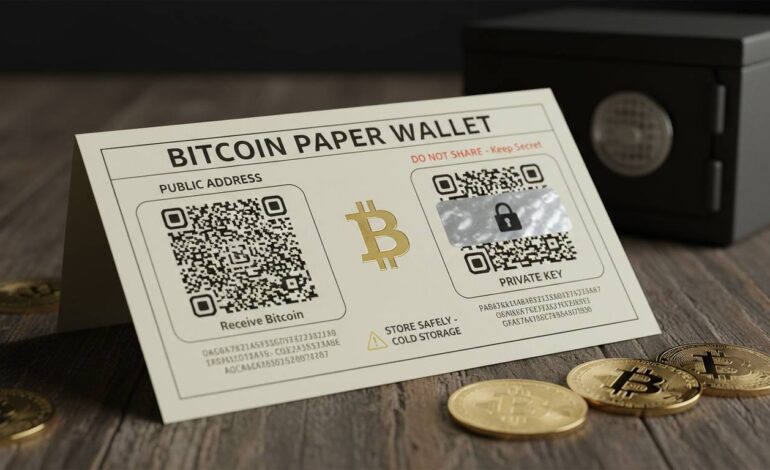
Paper Wallets: True Cold Storage
A paper wallet represents the purest form of cold storage—your private keys exist only on paper, completely immune to digital theft. Generating a paper wallet requires extreme care to ensure the keys are never exposed to any internet-connected device during creation.
Generation Process
Secure paper wallet generation demands an air-gapped computer running software specifically designed for this purpose. The recommended approach uses a live Linux distribution booted from USB (like Tails or a dedicated security-focused distribution) running completely offline. Generate entropy using the computer’s built-in random number generator combined with physical input like mouse movements and keyboard presses.
BitcoinPaperWallet.com offers customizable designs, though its website should be accessed only from the air-gapped machine. BitAddress.org provides open-source generation, though verifying the code’s integrity before use requires technical expertise. The critical principle: the computer generating keys must never connect to the internet before or during the process.
Security Protocols
Print your paper wallet using a dedicated printer disconnected from any network. USB-connected printers introduce attack vectors—laser printers with non-volatile memory pose particular risks. After printing, verify the public key matches what the software displayed. Immediately store the printed wallet in a secure physical location—safety deposit boxes, home safes, or secure filing systems serve well.
Crucial security enhancement: Create multiple paper wallet copies stored in separate geographic locations. Single copies represent catastrophic loss risk if destroyed by fire, flood, or misplacement.
Multi-Signature Security: Eliminating Single Points of Failure
Multi-signature (multisig) wallets require multiple private keys to authorize transactions, distributing control across different locations or devices. This architecture provides protection against single points of failure—whether from device theft, loss, or compromise—and enables inheritance planning and collaborative custody.
Implementation Options
Hardware-based multisig typically uses multiple hardware wallets, but software alternatives exist. Casa Keymaster allows setup with mobile devices alone, offering 2-of-3 or 3-of-5 key arrangements. Unchained Capital provides collaborative custody with recovery options. For fully self-sovereign multisig, Electrum supports arbitrary M-of-N configurations using multiple devices or paper wallets.
Implementation example: A 2-of-3 multisig arrangement might keep one key on your phone, one as a paper wallet in your home safe, and one with a trusted family member. Losing any single key doesn’t result in fund loss—the other two can still authorize transactions.
Security Advantages
Multi-signature fundamentally changes your threat model. With single-key storage, anyone who obtains your key gains complete control. With multisig, attackers must compromise multiple independent systems simultaneously. This protects against both digital theft and physical coercion—you cannot be forced to reveal a key you don’t hold, because multiple keys from separate locations are required.
Qualified Custody Solutions: Professional Infrastructure
Bitcoin custody services provide institutional-grade security without requiring you to manage keys personally. These services store Bitcoin in cold storage with sophisticated security systems, insurance coverage, and regulatory compliance—though they charge fees for this convenience.
Leading Platforms
Coinbase Custody, BitGo Trust, and Fidelity Digital Assets serve institutional clients with varying minimums and fee structures. For retail users, platforms like River Financial and Swan Bitcoin offer integrated custody with low or no minimums. These services typically maintain 90-98% of holdings in offline cold storage, with hot wallets handling only operational needs.
Custody Considerations
Custody solutions introduce counterparty risk—you depend on the platform’s security and solvency. Platform failures, whether from hacking, operational issues, or bankruptcy, can result in fund loss. The 2014 Mt. Gox collapse and 2022 FTX failure demonstrate this risk concretely. However, reputable custodians carry substantial insurance, maintain transparent reserves, and operate under regulatory oversight that provides recourse.
Strategic use case: Many experienced holders use custodians for a portion of holdings requiring immediate liquidity while maintaining self-custody for long-term savings. This hybrid approach balances convenience against counterparty risk.
Security Best Practices Regardless of Wallet Type
Technical wallet security matters less than operational discipline. The most sophisticated wallet can be compromised through poor practices, while basic wallets protected by rigorous procedures remain secure.
Seed Phrase Protection
Your recovery seed phrase represents complete access to your funds. Never store it digitally—photos, text messages, and cloud storage are hackable. Write seeds on paper, metal (using products like Billfodl or Cryptosteel), or stamp into durable materials. Store copies in physically separate locations. Never share your seed phrase with anyone, including wallet “support” representatives—legitimate services never ask for this information.
Operational Security Essentials
Use two-factor authentication on every exchange and wallet service. Enable notifications for all transactions. Verify addresses manually—malware can swap clipboard contents, directing payments to attacker-controlled addresses. When transacting, confirm the first and last characters of addresses match your records. Never discuss Bitcoin holdings publicly or on social media.
Critical principle: Assume every device connected to the internet will eventually be compromised. Design your security architecture assuming this eventual breach—so that key exposure alone doesn’t result in fund loss.
Common Security Mistakes to Avoid
Understanding what not to do matters as much as knowing best practices. These errors account for the majority of Bitcoin theft losses.
| Mistake | Consequence | Prevention |
|---|---|---|
| Storing seed phrases digitally | Complete fund loss via hacking | Use physical storage only |
| Using weak passwords | Account compromise | Use unique 16+ character passwords with a password manager |
| Single-location storage | Irreversible loss from disaster | Geographic distribution |
| Discussing holdings publicly | Targeted attacks and social engineering | Maintain privacy |
| Ignoring software updates | Exploitable vulnerabilities | Enable automatic updates |
| Using public WiFi for transactions | Man-in-the-middle attacks | Use VPN or cellular connections |
| Trusting unverified recovery services | Scams and theft | Verify all communications independently |
Cloud Storage Danger
Storing wallet files, seed phrases, or private keys in cloud services (Google Drive, iCloud, Dropbox) creates catastrophic vulnerability. These platforms are prime hacker targets and have suffered numerous breaches. Cloud-connected devices can be compromised remotely. Never store recovery information in any cloud service, regardless of convenience.
Comparing Non-Hardware Storage Methods
| Method | Security Level | Cost | Convenience | Best For |
|---|---|---|---|---|
| Desktop Wallet (air-gapped) | Very High | Free | Low | Long-term holders with technical knowledge |
| Mobile Wallet | Moderate-High | Free | Very High | Spending funds and moderate holdings |
| Paper Wallet | Very High | Low | Low | Cold storage, maximum security |
| Multisig Software | Very High | Free | Medium | Shared control, enhanced security |
| Custody Service | High (with risk) | Fees | Very High | Large holdings, beginners |
Expert Perspectives on Self-Custody
The Bitcoin security landscape continues evolving as the ecosystem matures. Andreas Antonopoulos, author of “Mastering Bitcoin,” consistently emphasizes that security must match your threat model: “The security of your Bitcoin depends on the security of your keys. Hardware wallets provide a convenient way to secure keys, but they’re not the only way. The most important thing is understanding what you’re protecting against.”
Michaël Chaleard, founder of BTC Sessions, advises beginners to prioritize simplicity: “Many new users overcomplicate their setup and end up losing access through their own complexity. Start with a reputable mobile wallet, secure your seed properly, and only add complexity when you understand why you need it.”
Jameson Lopp, Casa co-founder and Bitcoin security specialist, stresses the importance of testing: “Whatever system you build, test recovery procedures before funding it. Send small amounts, verify recovery works, then fund larger amounts. Your test should simulate actual loss—recover from your seed phrase on a completely different device.”
Implementation: Building Your Storage System
Assessing your needs and building an appropriate storage system requires honest self-evaluation of your technical comfort, holding size, and threat model.
For Small Holdings (Under $1,000)
Use a reputable mobile wallet (BlueWallet, Coinbase Wallet) with strong device security. Enable biometric authentication. Write your seed phrase on paper and store it securely in your home. The convenience advantage outweighs the minimal theft incentive for small balances.
For Medium Holdings ($1,000-$50,000)
Implement a 2-of-2 or 2-of-3 multisig using mobile wallets or desktop software. Distribute seed phrase copies to secure locations. Consider one paper wallet in a safety deposit box. Balance accessibility with security through geographic distribution.
For Large Holdings ($50,000+)
Use hardware-free multisig (Electrum with air-gapped signing, or Casa/unchained solutions). Employ professional security practices: dedicated devices, geographic distribution, perhaps professional custody for a portion. Consider engaging a Bitcoin-savvy security consultant to audit your setup.
Conclusion
Storing Bitcoin safely without a hardware wallet requires more user discipline but remains fully achievable. Software wallets offer genuine security when combined with proper operational practices. Paper wallets provide near-impenetrable cold storage for long-term holdings. Multi-signature arrangements eliminate single points of failure. Custody services offer professional infrastructure at the cost of counterparty risk and ongoing fees.
Your storage choice should align with your technical capability, the amount you’re protecting, and your willingness to manage complexity. The best wallet is one you’ll actually use correctly—secure setups abandoned because they’re too difficult provide no protection at all. Start simply, establish good habits, and add security layers as your holdings and understanding grow.
Frequently Asked Questions
Can software wallets be as secure as hardware wallets?
Yes, when properly configured. Air-gapped desktop wallets with properly managed seed phrases achieve security comparable to hardware wallets. The advantage hardware provides is convenience—it makes secure practices easier. Without that discipline, a software wallet can actually be less secure than a hardware wallet in careless hands.
Is it safe to keep Bitcoin on exchange wallets?
Exchanges carry significant counterparty risk. While major platforms like Coinbase implement strong security, exchanges remain high-value targets for hackers and face potential operational failures. Exchanges suit short-term trading capital but shouldn’t store long-term holdings. Withdraw to personal custody for anything you don’t plan to trade within days.
How often should I back up my wallet seed phrase?
Verify your seed phrase storage at least annually for physical integrity. Paper degrades; metal can corrode in humid environments. Create new backups whenever you change your storage arrangement or move. Multiple geographically distributed copies protect against fire, flood, and other localized disasters.
What happens if I lose my seed phrase with no backups?
Loss of a seed phrase with no backup means permanent loss of funds. Bitcoin’s decentralization means no password reset, no customer service recovery, no central authority to appeal to. The network cannot help—your keys are your ownership. This consequence makes proper backup absolutely essential.
Should I use a paper wallet or keep my Bitcoin in a mobile wallet for long-term storage?
For long-term storage exceeding several years, paper wallets or dedicated cold storage software (air-gapped) provides better security than mobile wallets, which remain on internet-connected devices. However, paper wallets require more technical knowledge to generate safely. If you’re not confident in secure paper wallet generation, a properly secured mobile wallet with seed phrase properly stored remains a better choice than a poorly generated paper wallet.