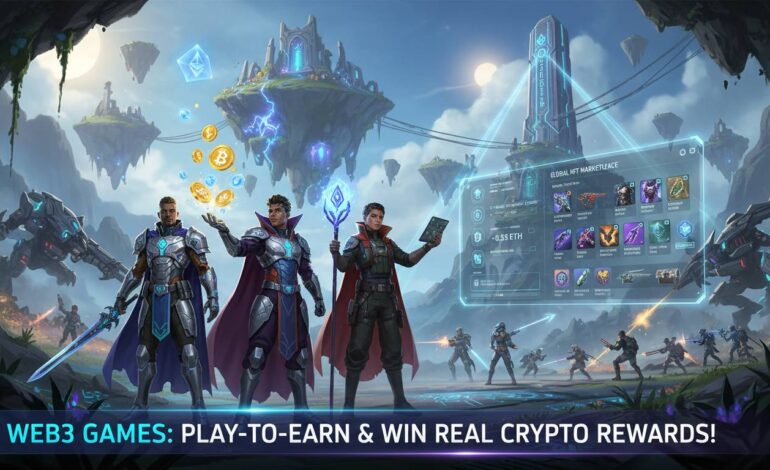
Web3 Games: Play-to-Earn & Win Real Crypto Rewards

The gaming industry is undergoing a revolutionary transformation as blockchain technology reshapes how players interact with digital entertainment. Web3 games, also known as blockchain games, have emerged as a groundbreaking category that allows players to earn real cryptocurrency rewards while enjoying immersive gaming experiences. This intersection of gaming and decentralized finance has attracted billions of dollars in investment and millions of active participants worldwide. As the sector continues to evolve, understanding the mechanics, opportunities, and challenges of web3 games becomes essential for both gaming enthusiasts and investors seeking to navigate this emerging market.
Understanding Web3 Games and Their Core Mechanics
Web3 games represent a paradigm shift from traditional gaming models by integrating blockchain technology into gameplay mechanics. Unlike conventional video games where in-game assets are owned by the game developers, web3 games enable true ownership of digital assets through non-fungible tokens (NFTs) and cryptocurrency tokens. Players can purchase, trade, and sell their in-game items on decentralized marketplaces, retaining value even when they stop playing a particular game.
The play-to-earn model serves as the cornerstone of web3 gaming. This innovative approach rewards players with cryptocurrency tokens for their time and skill investment in games. Players can complete quests, win battles, achieve high scores, or participate in tournament competitions to earn tokens that hold real monetary value. These rewards can be converted to traditional fiat currency through cryptocurrency exchanges, creating tangible income opportunities for players in regions with limited economic prospects.
GameFi, a portmanteau of gaming and finance, encompasses the financial elements embedded within web3 games. This includes staking mechanisms where players lock up tokens to earn additional rewards, liquidity mining programs that provide passive income streams, and governance tokens that grant holders voting rights on future game development decisions. The combination of entertainment and financial incentives has created a new category of gaming that appeals to both casual players and serious investors.
The Rise of Popular Web3 Gaming Platforms
The web3 gaming ecosystem has witnessed explosive growth with numerous platforms gaining substantial user bases and market traction. Axie Infinity emerged as one of the earliest mainstream successes in the space, allowing players to collect, breed, and battle fantasy creatures called Axies. The game pioneered the play-to-earn model and at its peak reportedly attracted millions of daily active users, with some players in developing countries earning significant income through consistent gameplay.
The Sandbox and Decentraland represent the metaverse category within web3 gaming, offering virtual world experiences where players can purchase land, build structures, and monetize their creations. These platforms utilize their native cryptocurrencies, SAND and MANA respectively, to facilitate transactions within the virtual ecosystems. Virtual real estate within these platforms has commanded substantial prices, with some land parcels selling for hundreds of thousands of dollars.
Stepn gained particular attention by combining fitness tracking with web3 gaming elements. Players earn cryptocurrency rewards by walking, jogging, or running while wearing fitness trackers. This innovative approach demonstrated the potential for web3 technology to promote healthy lifestyles while providing financial incentives. The game successfully attracted users who might not otherwise engage with cryptocurrency or blockchain applications.
Illuvium, Gods Unchained, and Star Atlas represent other notable entries in the space, each offering distinct gameplay experiences ranging from creature collection and trading card games to space exploration simulations. The diversity of gaming genres within web3 demonstrates the versatility of blockchain technology and its potential to enhance various types of interactive entertainment.
Market Growth and Investment Trends
The web3 gaming sector has experienced remarkable growth despite market volatility affecting the broader cryptocurrency industry. Investment in blockchain gaming startups has increased substantially as venture capital firms recognize the potential for mass adoption. Major gaming companies and traditional entertainment conglomerates have also begun exploring web3 integration, indicating growing mainstream acceptance of the technology.
Industry analysts have documented significant user growth across web3 gaming platforms, with total wallet addresses interacting with gaming dApps reaching into the millions. However, the market has also experienced challenges, including volatile token prices that can dramatically impact player earnings and sustainability concerns regarding certain economic models that proved unsustainable during cryptocurrency market downturns.
The sector continues to attract attention from institutional investors seeking exposure to the intersection of gaming and blockchain technology. Gaming-focused cryptocurrency funds have emerged, providing investment vehicles for those interested in the sector’s potential growth. Additionally, gaming companies have begun conducting initial game token offerings, creating new fundraising mechanisms that align developer incentives with community participation.
Benefits and Opportunities for Players
Web3 games offer several compelling advantages over traditional gaming models that have attracted millions of players to the ecosystem. True ownership of in-game assets represents perhaps the most significant benefit, allowing players to retain value from their time investment. Unlike traditional games where items lose all value when players stop playing or servers shut down, blockchain-based assets can be sold or transferred.
The play-to-earn model has proven particularly impactful in developing economies where traditional employment opportunities may be limited. Players in countries like the Philippines, Venezuela, and Nigeria have reportedly earned substantial income through web3 gaming, providing economic opportunities that might otherwise be unavailable. This global accessibility has contributed to the diverse player base characterizing the web3 gaming community.
Community governance represents another significant opportunity, with many web3 games implementing decentralized autonomous organization (DAO) structures that give players voice in development decisions. This democratic approach creates games that better reflect player preferences and fosters stronger community engagement. Players become stakeholders in the game’s success rather than merely consumers.
Challenges and Considerations
Despite the promising potential, web3 games face significant challenges that industry participants must address for sustainable growth. Environmental concerns regarding blockchain energy consumption have prompted many platforms to transition to more sustainable proof-of-stake consensus mechanisms. The industry has made substantial progress in reducing its carbon footprint, though critics continue to scrutinize the environmental impact.
Regulatory uncertainty presents another challenge as governments worldwide grapple with how to classify and regulate web3 gaming assets. Questions regarding securities classification, tax treatment of cryptocurrency earnings, and consumer protection requirements remain largely unresolved in many jurisdictions. This regulatory ambiguity creates compliance challenges for game developers and uncertainty for players.
Scalability limitations have historically affected web3 gaming experiences, with blockchain congestion leading to slow transaction times and high fees during peak usage periods. However, Layer 2 solutions and blockchain infrastructure improvements have addressed many of these technical challenges, enabling more seamless gaming experiences. Continued technological development remains essential for achieving the mass adoption that industry participants envision.
Market volatility represents a fundamental challenge for play-to-earn economic models. Token prices can fluctuate dramatically, impacting player earnings and potentially making gaming economically unviable for some participants. Sustainable economic design that provides consistent value regardless of market conditions remains an ongoing area of innovation and experimentation.
The Future of Web3 Gaming
The trajectory of web3 games points toward continued innovation and mainstream integration as the technology matures. Major gaming companies have announced plans to incorporate blockchain elements into existing franchises, potentially introducing web3 concepts to vast existing player bases. This institutional adoption could accelerate growth and legitimize the sector beyond its current enthusiast audience.
Technological advancements promise to enhance web3 gaming experiences significantly. Improved blockchain scalability, reduced transaction costs, and enhanced interoperability between different gaming ecosystems will create more seamless player experiences. Cross-chain compatibility could enable players to utilize assets across multiple games and platforms, maximizing the value of their digital collections.
The convergence of web3 gaming with other emerging technologies like virtual reality and augmented reality suggests exciting possibilities for immersive experiences that combine ownership economy benefits with cutting-edge entertainment technology. These combinations could redefine interactive entertainment and create new categories of experiences that blur the boundaries between physical and digital worlds.
Conclusion
Web3 games represent a transformative development in the gaming industry, offering players true ownership of digital assets and opportunities to earn real cryptocurrency rewards through gameplay. While challenges including regulatory uncertainty, market volatility, and scalability concerns persist, the sector continues to evolve and mature. The integration of blockchain technology with gaming creates new economic models that benefit players while introducing innovative gameplay mechanics. As technology advances and mainstream adoption increases, web3 games are poised to become a permanent fixture in the entertainment landscape, fundamentally changing how players interact with digital games and the value they derive from their gaming experiences.
Frequently Asked Questions
What are web3 games?
Web3 games are video games that integrate blockchain technology, allowing players to own their in-game assets as NFTs and earn cryptocurrency rewards through gameplay. These games operate on decentralized networks, providing true ownership and the ability to trade or sell digital items outside the game.
How do play-to-earn games work?
Play-to-earn games reward players with cryptocurrency tokens for completing in-game activities such as completing quests, winning battles, or achieving milestones. Players can accumulate these tokens and either reinvest them in the game or convert them to fiat currency through cryptocurrency exchanges.
Are web3 games safe to play?
Web3 games carry risks including cryptocurrency volatility, potential scams, and regulatory uncertainty. Players should research games thoroughly, understand the economic models, use reputable platforms, and only invest what they can afford to lose. Security measures like hardware wallets and careful permission management help protect digital assets.
Can you really earn money playing web3 games?
Yes, players can earn cryptocurrency with real monetary value through web3 games. Earnings depend on the game, time investment, skill level, and market conditions. Some players have earned substantial income, particularly in regions with limited economic opportunities, though results vary significantly.
What is the difference between web2 and web3 games?
Traditional web2 games are owned and controlled by centralized companies that determine all rules, asset values, and whether games continue operating. Web3 games utilize decentralized blockchain technology, giving players ownership of their assets, community governance rights, and the ability to trade items freely.
Which web3 games are the most popular?
Popular web3 games include Axie Infinity, The Sandbox, Decentraland, Stepn, Illuvium, Gods Unchained, and Star Atlas. Each offers different gameplay mechanics ranging from creature collection and virtual real estate to fitness apps and trading card games.