What Is Cryptocurrency? A Beginner’s Complete Guide


In 2009, someone (or some group) going by the name Satoshi Nakamoto launched a weird experiment: digital money that didn’t need banks. No central authority, no government backing, just math and a network of computers keeping everything honest. Fourteen years later, that experiment is worth over a trillion dollars and has forced the entire financial world to reckon with a simple question: what even is money, really?
This guide walks through the basics of cryptocurrency—what it is, how it works, and why it matters.
What Is Cryptocurrency, Exactly?
Cryptocurrency is digital money that runs on decentralized networks. That’s the core of it. No central bank issues it, no government guarantees it, and no company processes your transactions.
Instead, cryptocurrency relies on cryptography and a shared record called a blockchain. Think of a blockchain as a giant Google Doc that thousands of people can view but no one can secretly edit. Every transaction gets recorded, and once it’s written, it basically can’t be changed.
The word itself breaks down into “cryptography” + “currency”—because the security of these systems depends on advanced math, not trust in any single institution.
Blockchain is the engine under the hood. Each “block” contains a group of transactions, and every block links to the previous one through a cryptographic hash—a string of numbers that would change if someone tried to tamper with past records. This is what people mean when they call blockchain “immutable.”
Bitcoin was the first. Created in 2009, it aimed to let people send payments directly to each other without a bank in the middle. Since then, thousands of alternatives have launched—Ethereum, Solana, Cardano, and many more. Each has different technical features, but they all share the same basic idea: money without a middleman.
How Crypto Transactions Actually Work
Here’s what happens when you send crypto to someone:
You initiate a transaction with your wallet software. That transaction gets broadcast to a network of computers (called nodes) that maintain the blockchain. These computers check that you actually have the funds to send.
Then the transaction waits in a queue. In proof-of-work systems like Bitcoin, miners—people running powerful computers—compete to solve a complex mathematical puzzle. The winner gets to add the next block of transactions to the chain and collects newly minted crypto as a reward. This competition is what secures the network.
In proof-of-work systems like Bitcoin, miners solve puzzles to add blocks. Ethereum and some other cryptocurrencies use a different approach called proof-of-stake, where validators put up their own crypto as collateral to confirm transactions—less energy-intensive than mining.
Once your transaction is confirmed and added to a block, it’s permanent. There’s no chargeback, no dispute process, no way to reverse it. This is a feature, not a bug—it means you don’t need anyone’s permission to use your money. But it also means if you send crypto to the wrong address, it’s gone forever.
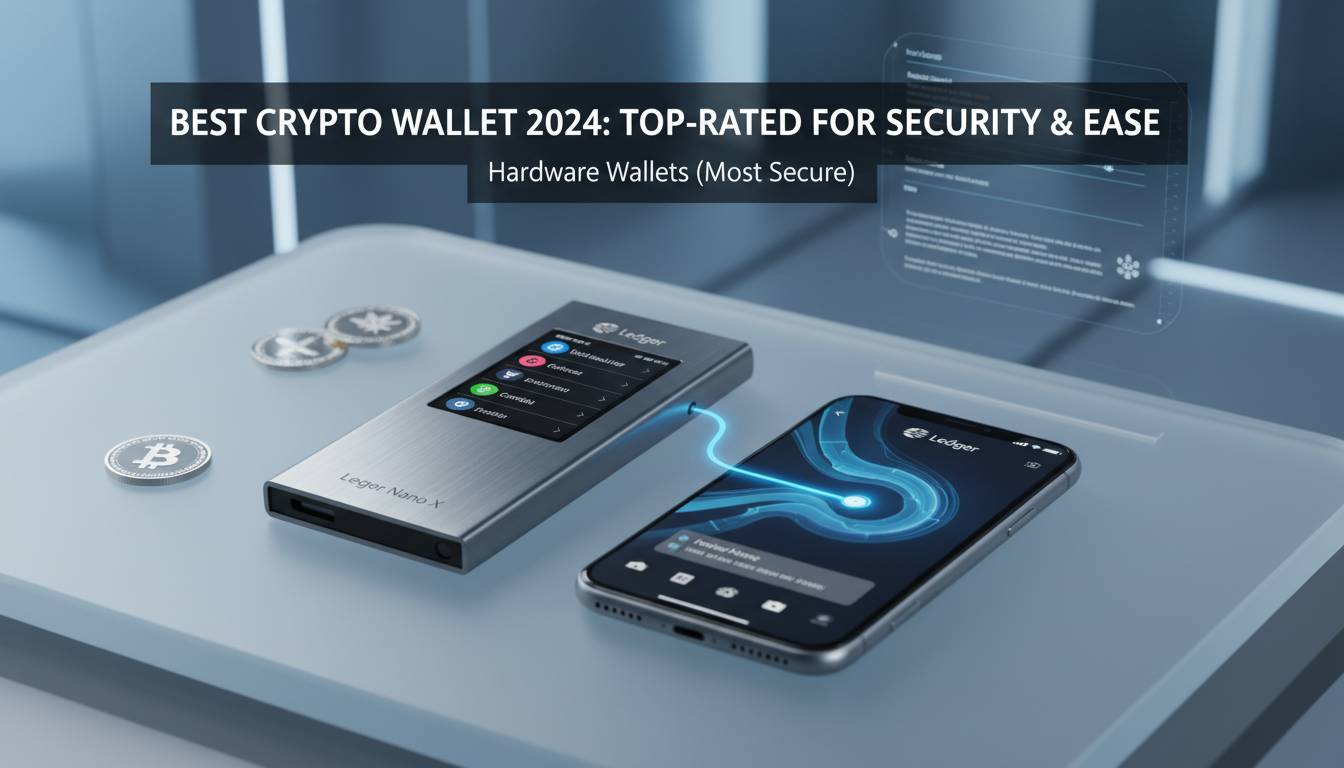
Your wallet holds two keys: a public key (like an account number—you can share this to receive funds) and a private key (like a password—keep this secret or lose your money). If you lose your private key, there’s no customer support to call. Your crypto is simply gone.
The Major Types of Cryptocurrency
Bitcoin is the biggest and best-known. Its supply is capped at 21 million coins—nothing new will ever be created, which is why people call it “digital gold.” Most people treat it as a store of value rather than something you spend daily.
Ethereum is different. It introduced smart contracts—tiny programs that automatically execute when conditions are met. This enabled things like decentralized apps, lending platforms, and NFTs. Ether is Ethereum’s native currency, and you need it to pay for transactions on the network.
Stablecoins are designed to stay worth $1 (or another fixed amount). Tether, USD Coin, and Dai hold reserves of real-world assets to maintain their peg. They’re useful for tradingcrypto without the wild price swings, or for moving money across borders quickly.
Privacy coins like Monero and Zcash obscure transaction details—sender, recipient, and amount are all hidden. This appeals to people who value financial privacy, but regulators worry these features enable illegal activity. The tension isn’t resolved.
The Technology: Blockchains and Scaling
Blockchains have some real strengths: they’re transparent (anyone can verify transactions), secure (tampering is mathematically hard), and don’t require trusting a single company. But they also have problems.
Scalability is the big one. Bitcoin processes about 7 transactions per second; Visa does thousands. When a blockchain gets busy, transactions slow down and fees go up.
Layer-2 solutions try to fix this. They process transactions off the main blockchain and then settle them in batches on the underlying network. The Lightning Network (for Bitcoin) and various rollups (for Ethereum) are examples. These can dramatically increase throughput while keeping costs low.
Different blockchains make different tradeoffs. Some prioritize security, others speed, others low fees. No single blockchain does everything perfectly—yet.
Benefits and Risks
Where crypto actually helps:
- Cross-border payments: Send money internationally in hours, not days, and often for a fraction of the cost.
- Financial access: Anyone with internet can use crypto—no bank account required.
- Transparency: Public blockchains let anyone verify the total supply and audit transactions.
- Programmable money: Smart contracts can automate complex financial arrangements without lawyers or brokers.
Where it gets messy:
- Volatility: Crypto prices swing wildly. You could double your money or lose half in a week. It’s not a safe place for money you need to be stable.
- Security: Exchanges get hacked. Scams are everywhere. If your crypto is stolen, it’s not coming back.
- No consumer protections: Send money to a scammer? No one is refunding you. Send to the wrong address? That’s on you.
- Regulation is a moving target: Governments are still figuring out how to tax, regulate, and police crypto. Rules can change fast.
The Regulatory Picture
Regulators worldwide are still catching up. In the US, multiple agencies claim authority—the SEC says many tokens are securities, the CFTC oversees derivatives, and FinCEN handles anti-money laundering. The result is a patchwork of rules that confuses everyone.
The EU took a different approach with MiCA (Markets in Crypto-Assets Regulation), which took full effect in 2024. It creates a clear framework for crypto companies operating in the bloc—some say it’s a model; others say it’s too restrictive.
Institutional adoption is growing. BlackRock offers Bitcoin funds. Fidelity lets 401(k) holders allocate to crypto. Major banks have started offering custody services. Whether this mainstream embrace makes crypto more stable or just more entangled with the traditional financial system depends on who you ask.
Central banks are also experimenting with their own digital currencies—CBDCs. These would be government-issued, unlike decentralized crypto, but they’d use similar technology. Over 100 countries are exploring them.
Bottom Line
Cryptocurrency isn’t just a financial asset—it’s a different way of thinking about trust, ownership, and who controls money. Whether it ends up reshaping global finance or eventually fades as a speculative fad, it’s already changed the conversation.
If you’re curious, start small, learn the basics, and never invest more than you can afford to lose. The space moves fast, and the only constant is uncertainty.
Frequently Asked Questions
What’s the simplest way to explain cryptocurrency?
It’s digital money that works without banks or governments. A network of computers maintains a shared record of who owns what, and math keeps everyone honest.
How do I actually buy crypto?
Sign up for an exchange like Coinbase or Binance, verify your identity, link a bank account, and buy with regular money. You’ll need a wallet to store what you buy—or you can leave it on the exchange (less secure, more convenient).
Is it safe to invest in?
No investment is risk-free, but crypto is especially risky. Prices crash often and dramatically. Only put in money you won’t need and can afford to lose completely.
Why do crypto prices move so much?
Markets are small relative to traditional finance, so big trades move prices a lot. There’s also no earnings reports or dividends—price is purely about what people think someone else will pay later. News, drama, and social media amplify every swing.
Do I have to pay taxes on crypto?
In the US, yes. The IRS treats it as property. Selling for a profit is a taxable event. Keeping detailed records of every transaction is tedious but necessary.
Can I use crypto to buy stuff?
Some places accept it—Overstock, Microsoft, some small businesses. But for everyday purchases, regular cards are still far more practical. Crypto is still more like digital gold than digital cash.