What Is DeFi? Simply Explained for Beginners

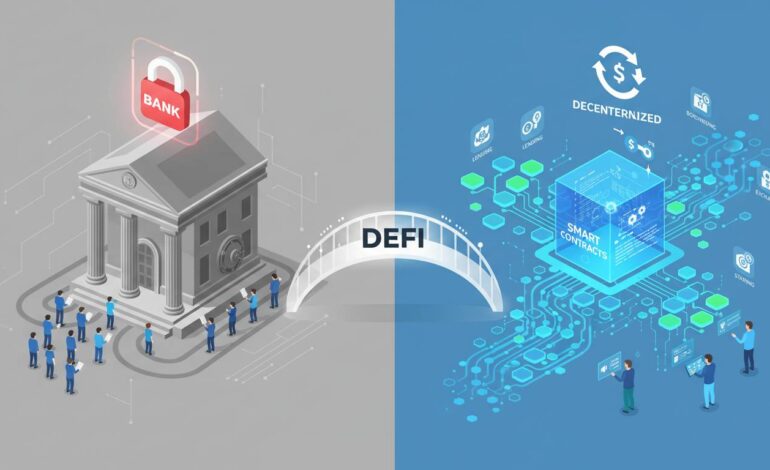
Imagine a world where you can save, borrow, trade, and earn interest on your money without ever stepping into a bank. No paperwork, no waiting in lines, no middlemen taking a cut. That world exists today, and it’s called DeFi—short for Decentralized Finance.
DeFi is transforming how people think about money. In 2024, the total value locked in DeFi protocols surpassed $100 billion, according to DeFi Llama, showing mainstream adoption is accelerating. Whether you’re looking to earn higher interest on your savings, get a loan without a credit check, or trade assets instantly, DeFi offers alternatives that traditional financial institutions simply cannot match.
This guide breaks down DeFi in plain English—no jargon, no technical overwhelm. By the end, you’ll understand what DeFi is, how it works, why it matters, and whether it’s right for you.
DeFi Explained: The Simple Definition
DeFi stands for Decentralized Finance—a financial system built on blockchain technology that operates without traditional intermediaries like banks, brokerages, or payment processors.
Think of DeFi as recreating every financial service you know—savings accounts, loans, insurance, trading—but with code instead of institutions. When you deposit money in a DeFi protocol, smart contracts (self-executing programs) automatically handle what a bank would do: track your balance, calculate interest, process withdrawals, and enforce rules.
The “decentralized” part means no single company or authority controls these systems. Instead, they’re run by code across thousands of computers worldwide. This makes them transparent (anyone can audit the code), resistant to censorship (no one can freeze your assets), and accessible to anyone with an internet connection.
How DeFi Works: The Building Blocks
Understanding DeFi requires understanding three core components that make it possible: blockchain networks, smart contracts, and decentralized applications.
Blockchain Networks as the Foundation
DeFi runs on blockchains—distributed digital ledgers that record transactions across many computers. Ethereum is the dominant DeFi blockchain, hosting over 60% of all DeFi activity as of 2024, per data from DeFi Lama. Other major chains include Solana, Avalanche, BNB Chain, and Polygon, each offering different tradeoffs in speed, cost, and security.
These blockchains serve as the infrastructure where DeFi operates. They provide the security, transparency, and decentralization that make DeFi trustworthy.
Smart Contracts: The Digital Middlemen
A smart contract is a self-executing program stored on the blockchain that automatically enforces rules when certain conditions are met. Here’s a simple example: if you lend your money through a DeFi protocol, the smart contract automatically calculates interest and distributes it to you—no bank employee needed.
According to a 2023 report from Chainalysis, smart contracts have facilitated over $1.6 trillion in cryptocurrency transactions, highlighting their growing role in financial operations. The beauty is that these contracts are “trustless”—you don’t need to trust a bank or company because the code does exactly what it says, every time.
Decentralized Applications (dApps)
A dApp (decentralized application) is software built on a blockchain that interacts with smart contracts to provide user-friendly interfaces. Instead of typing code, you use an app that connects to the blockchain. Popular DeFi dApps include Uniswap (for trading), Aave (for lending), and Curve (for stablecoin swapping).
Key DeFi Services Explained
DeFi has replicated most traditional financial services. Here’s how the most popular ones work:
Decentralized Lending and Borrowing
Traditional banks pay you around 0.01% to 4% annually on savings accounts while lending your money out at much higher rates. DeFi cuts out the middleman.
How it works: You deposit cryptocurrency into a liquidity pool. Borrowers can then take loans from these pools by putting up more cryptocurrency as collateral. Interest rates are determined algorithmically based on supply and demand—in real-time.
Aave, one of the largest DeFi lending protocols, has facilitated over $30 billion in cumulative borrowing volume, per data from DeFi Pulse. Borrowers don’t undergo credit checks because the system doesn’t care about your credit history—it only cares about whether your collateral is sufficient.
Decentralized Exchanges (DEXs)
When you want to trade stocks, you use a brokerage. When you want to trade cryptocurrencies the traditional way, you use a centralized exchange like Coinbase. A DEX operates differently.
How it works: Instead of matching your order with another person’s order through a central server, DEXes use automated market makers (AMMs). You trade directly from your wallet against a liquidity pool—a collection of funds provided by other users.
Uniswap, the largest DEX on Ethereum, processes billions in daily trading volume. The key advantage: you never give up custody of your funds to a centralized entity, reducing counterparty risk.
Stablecoins: DeFi’s Dollar Alternative
Cryptocurrency prices are notoriously volatile—Bitcoin can swing 10% in a day. This makes them impractical for everyday transactions or as a store of value. Enter stablecoins.
Stablecoins are cryptocurrencies designed to maintain a fixed value, typically $1. They achieve this through different mechanisms:
- Fiat-backed stablecoins (like USDC): Each token is backed 1:1 by actual dollars held in reserve
- Crypto-backed stablecoins (like DAI): Users lock cryptocurrency as collateral to generate stablecoins algorithmically
- Algorithmic stablecoins: Use complex mechanisms to maintain peg (though this approach has seen failures)
USDC, the largest regulated stablecoin, has a market cap exceeding $40 billion as of 2024, per CoinMarketCap data. Stablecoins are essential to DeFi because they provide the stability needed for lending, borrowing, and trading.
Yield Farming and Staking
In traditional finance, your savings account earns interest. In DeFi, you have multiple ways to earn yields on your crypto assets.
Yield farming involves moving your crypto between different DeFi protocols to maximize returns. It’s like shopping around for the highest savings account rates—but automated and potentially much higher. Yields can range from 2% to over 20% annually, though they fluctuate constantly.
Staking involves locking up cryptocurrency to support a blockchain network’s operations (like validating transactions). In return, you earn staking rewards. Ethereum’s transition to proof-of-stake in 2022 made staking accessible, with validators earning approximately 3-5% annually on their staked ETH, according to staking rewards data.
Benefits of DeFi: Why People Are Excited
DeFi offers several compelling advantages over traditional finance:
| Benefit | DeFi | Traditional Finance |
|---|---|---|
| Accessibility | Anyone with internet | Requires bank account, ID |
| Operating Hours | 24/7/365 | Business hours only |
| Interest Rates | Market-driven, often higher | Set by institutions |
| Transparency | Public code and transactions | Private internal systems |
| Speed | Minutes to hours | Days to weeks |
| Privacy | Pseudonymous | Requires extensive KYC |
Global accessibility is perhaps DeFi’s most transformative feature. According to the World Bank, approximately 1.4 billion adults lack access to traditional banking services. DeFi requires only an internet connection and a smartphone—no ID, no physical address, no minimum balance.
Higher yields attract many users. While traditional savings accounts offer less than 1% in the US, DeFi lending protocols routinely offer 3-8% on stablecoin deposits. The catch? These yields are variable and can drop rapidly.
Transparency distinguishes DeFi from traditional finance. Every transaction, every smart contract, every rate change is visible on the public blockchain. This openness enables what researchers call “programmable transparency”—the ability to verify exactly how systems operate.
Risks and Challenges: What You Need to Know
DeFi isn’t without significant risks. Understanding these challenges is essential before participating:
Smart Contract Vulnerabilities
Code can have bugs. When those bugs involve financial contracts, the results can be catastrophic. According to Chainalysis, hacks and exploits accounted for approximately $1.8 billion in DeFi protocol losses in 2023 alone.
Mitigation: Use established protocols with audited code, don’t invest more than you can afford to lose, and consider using insurance protocols like Nexus Mutual.
Impermanent Loss
When you provide liquidity to a DEX, you deposit two assets (like ETH and USDC). If the price of one asset changes significantly relative to the other, you may lose value compared to simply holding those assets. This is called impermanent loss.
Mitigation: Understand the mechanism before providing liquidity, stick to stablecoin pairs when possible, and research impermanent loss calculators.
Regulatory Uncertainty
DeFi exists in a legal gray area worldwide. Regulations vary dramatically between countries, and new rules could impact how DeFi protocols operate or restrict access.
Mitigation: Stay informed about regulatory developments in your jurisdiction and consider the tax implications of DeFi activities.
Volatility and Scams
The DeFi space attracts scams—fake websites, rug pulls where developers abandon projects after collecting funds, and phishing attacks. Due diligence is non-negotiable.
Mitigation: Verify protocol addresses carefully, never share your seed phrase, use hardware wallets for significant funds, and research projects thoroughly before participating.
How to Get Started with DeFi
Ready to explore DeFi? Here’s a practical roadmap for beginners:
Step 1: Set Up a Wallet
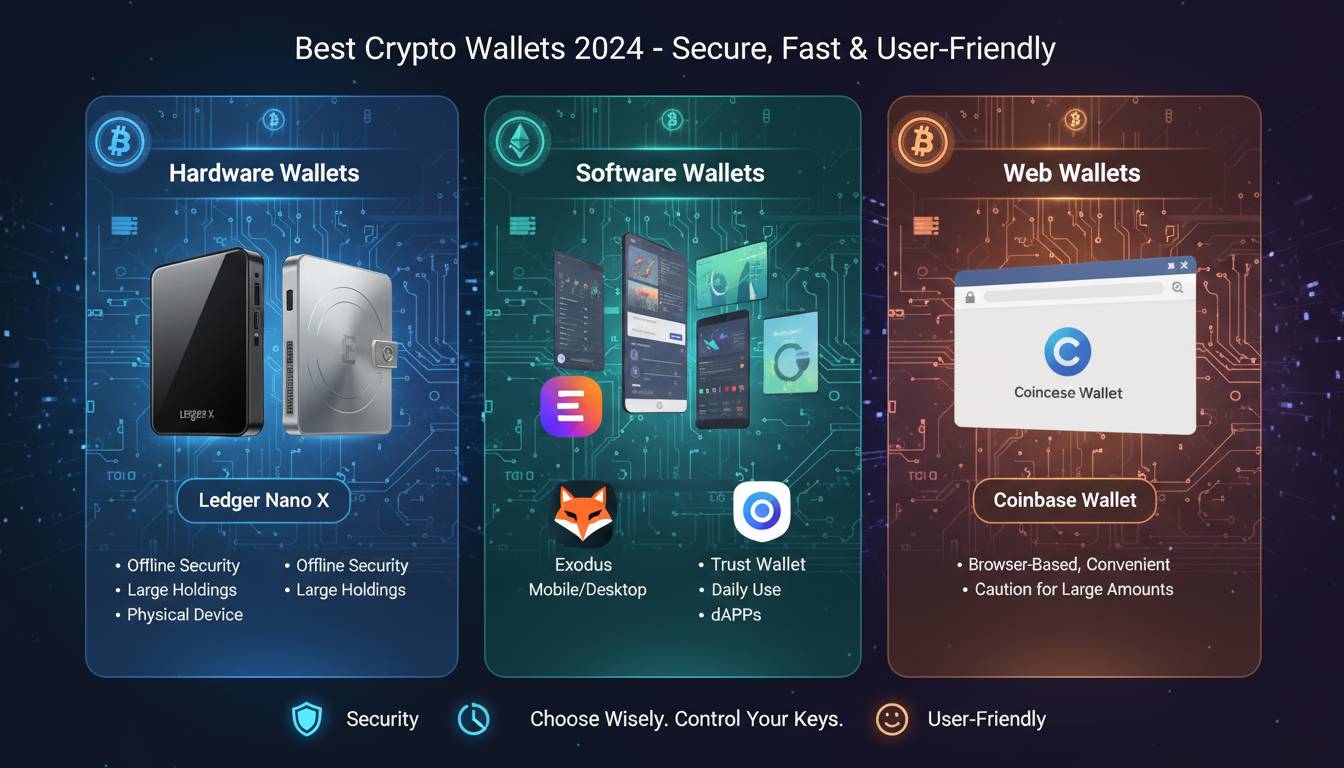
You’ll need a crypto wallet to interact with DeFi. MetaMask is the most popular option for Ethereum-based DeFi. It’s a browser extension and mobile app that stores your private keys and connects to DeFi protocols.
Steps:
1. Download MetaMask from the official website
2. Create your wallet and securely back up your seed phrase (write it down, store it offline)
3. Never share your seed phrase with anyone
Step 2: Acquire Cryptocurrency
You’ll need cryptocurrency to use DeFi. The easiest path is:
- Create an account on a regulated US exchange (Coinbase, Kraken, or Gemini)
- Complete identity verification (KYC)
- Purchase Ethereum (ETH)—the most widely accepted DeFi currency
Step 3: Connect to a DeFi Protocol
Once you have ETH in your MetaMask wallet:
- Visit a DeFi platform (Aave, Uniswap, or Curve)
- Click “Connect Wallet”
- Approve the connection in MetaMask
Start small. Transfer a tiny amount first to understand the process before committing significant funds.
Step 4: Choose Your First DeFi Activity
For beginners, these activities offer the best balance of simplicity and risk:
- Staking ETH: Earning ~4% simply by holding ETH in a staking protocol
- Stablecoin lending: Earning 3-6% on USDC or USDT deposits
- DEX swapping: Trading one token for another without a centralized exchange
The Future of DeFi: Where It’s Heading
DeFi continues evolving rapidly. Several trends are shaping its trajectory:
Institutional adoption is accelerating. Major financial institutions including BlackRock and Fidelity have shown interest in blockchain-based financial products. This could bring significant capital and legitimacy to the space while potentially creating hybrid systems that blend DeFi efficiency with traditional compliance.
Cross-chain interoperability is improving. Currently, DeFi is fragmented across different blockchains. Projects like Polkadot, Cosmos, and layer-2 solutions are making it easier to move assets between networks, potentially creating a more unified DeFi ecosystem.
Real-world asset tokenization is expanding. DeFi protocols are beginning to tokenize real-world assets like real estate, treasury bonds, and commodities. This could bring trillions in traditional assets onto blockchain rails.
Regulatory clarity is coming. While uncertainty remains, many governments are developing frameworks for cryptocurrency and DeFi. Clearer regulations could protect consumers while enabling institutional participation.
Frequently Asked Questions
What exactly is DeFi in simple terms?
DeFi (Decentralized Finance) is a financial system built on blockchain technology that allows people to save, borrow, trade, and earn interest without needing traditional banks or financial institutions. It uses smart contracts—self-executing code that automatically handles financial transactions—to replace middlemen with software.
Is DeFi safe to use?
DeFi carries significant risks including potential loss from hacking, smart contract bugs, and scams. No centralized entity protects your funds like a bank would. If you decide to participate, start with small amounts, use established protocols with audited code, and never invest more than you can afford to lose.
Do I need a lot of money to start with DeFi?
No. One of DeFi’s advantages is accessibility—you can often start with just a few dollars. However, be aware that transaction fees (called “gas” on Ethereum) can be high for small amounts, making very small DeFi participation economically impractical during busy network periods.
How do DeFi yields compare to traditional savings accounts?
DeFi yields are typically much higher than traditional savings accounts. While US banks offer 0.01% to 4% annually, DeFi lending protocols often offer 3-8% on stablecoins and even higher on volatile assets. However, DeFi yields are variable and can drop suddenly, while bank deposits are FDIC-insured.
What happens if I lose access to my wallet?
If you lose your wallet’s seed phrase, you lose access to your funds permanently. There is no password reset, no customer service to call. This is by design—it means no one else can access your funds either. Always back up your seed phrase securely and never store it digitally.
Can DeFi work without cryptocurrency?
Currently, most DeFi requires cryptocurrency to function. However, the bridge between traditional finance and DeFi is improving. Fiat on-ramps (services that let you buy crypto directly with a bank account) make entering DeFi easier, and some projects are exploring ways to represent traditional currencies on blockchain rails.
DeFi represents a fundamental shift in how humans can interact with money. It’s not perfect—it’s volatile, complex, and risky. But for millions of people worldwide who are underbanked, locked out of traditional finance, or simply seeking better returns, DeFi offers genuine alternatives.
Start small, learn continuously, and never invest more than you can afford to lose. The financial revolution is happening—and now you understand where to watch it unfold.