Gas Fees: Why Claiming a Reward Can Cost More Than the Reward
A plain explanation of network fees, why they rise and fall, and how to work out whether claiming a small crypto reward is worth the cost of claiming it.

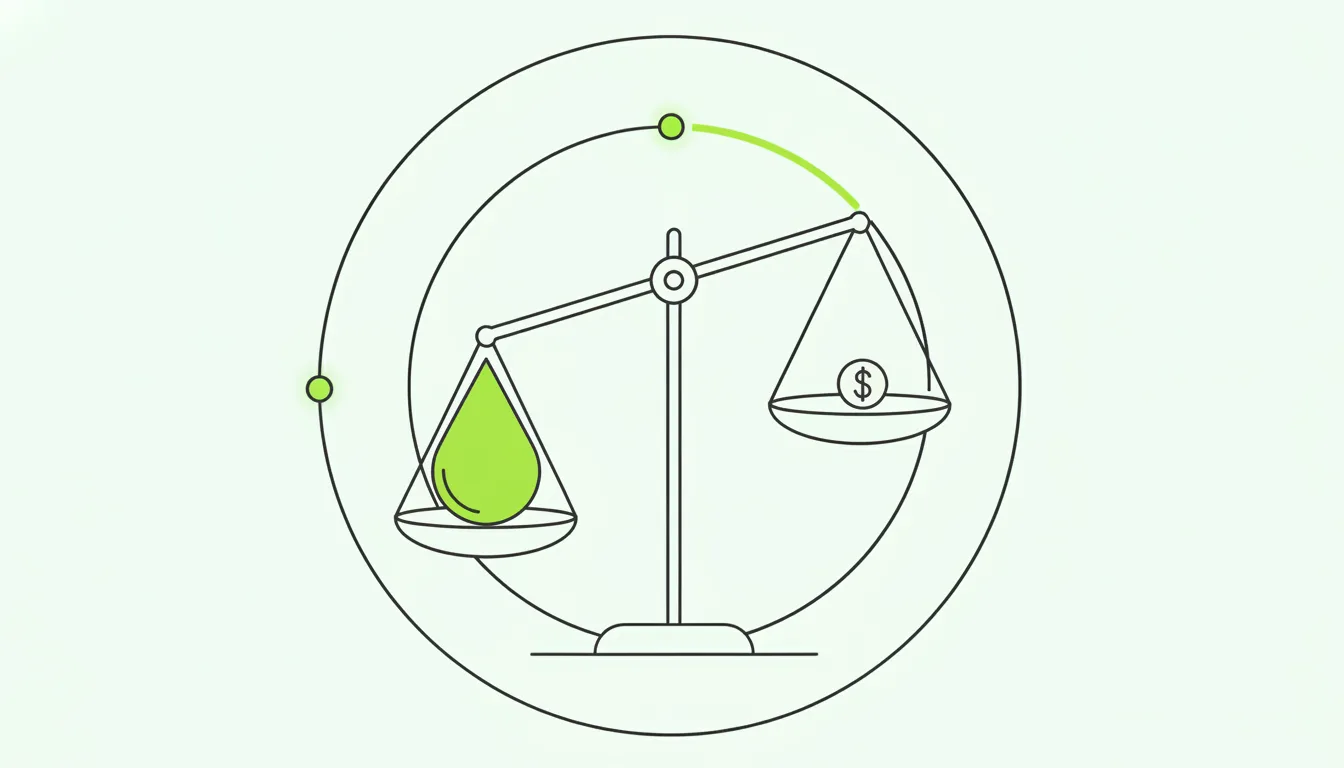
One of the most deflating moments in crypto is a small one. You qualify for a reward, you go to collect it, and the cost of collecting it swallows most of what you were owed. Nothing went wrong. Nobody stole anything. You simply met the network fee, and the network fee did not care how small your reward was.
This article explains what those fees are, why they move, and how to decide whether a claim is worth making. It is written for people new to this, because that is exactly who tends to get caught out.
What a network fee actually pays for
A blockchain is a shared ledger maintained by many independent computers. Every time someone wants to add something to that ledger, the network has to process it, agree on it, and store it forever. That work costs something, and the fee you pay is what covers it.
The important thing to understand is who receives the fee. It does not go to the project giving you the reward. It does not go to a website like this one. It goes to the network itself, distributed to whoever does the work of processing transactions. That is why nobody can waive it for you, and why anyone claiming they can waive it for you is worth a very hard look.
Because block space is limited, fees behave like any other market for a scarce resource. When lots of people want their transactions processed at once, they effectively bid against one another, and the price to get included goes up. When the network is quiet, it falls back down.
Why the same action costs different amounts
Two things determine what you pay. The first is how busy the network is at that moment. The second is how much computational work your particular transaction requires. Simply moving a token from one address to another is relatively cheap. Interacting with a more complicated contract, such as a claim that checks eligibility, updates several records and then transfers tokens, does more work and costs more.
This is why a reward claim frequently costs more than a plain transfer. You are not just receiving something. You are asking the network to run a small program on your behalf.
Why small rewards are the ones that hurt
Fees are largely independent of the value being moved. Claiming a very large token allocation and claiming a very small one can cost roughly the same, because the network is charging for the work, not taking a percentage.
That creates an uncomfortable arithmetic for beginners, who are far more likely to be offered small rewards than large ones. A modest distribution, split across many recipients, can leave each person with an amount that a busy network’s fees would comfortably exceed. The reward is real. The claim is still a bad deal.
There is a second sting. On most networks, a failed transaction still costs a fee. If your claim reverts because you were not actually eligible, because the claim window closed, or because you set your fee too low, you can pay and receive nothing. This is one reason unsolicited “you have a reward waiting” messages are so profitable for the people sending them, even when no reward exists.
How to decide before you click
The habit worth building is simple: price the claim before you make it, not after. Treat it like any other purchase, because that is what it is. You are spending a known amount to receive an uncertain one.
- Estimate the fee first. Our gas estimator is there to give you a sense of what a transaction is likely to cost on a given network at a given moment.
- Work out what the reward is actually worth to you. Not what it might be worth later. What you could realistically get for it now, after any further fees involved in moving or converting it.
- Check whether the claim expires. Some do, some do not. If it does not, waiting for a quieter period is often the whole answer.
- Consider whether the network matters. The same project may distribute on different networks with very different fee levels. Where you have a genuine choice, the cheaper network can turn a pointless claim into a worthwhile one.
- Accept that sometimes the answer is no. Leaving a tiny reward unclaimed is a perfectly rational decision. It is not a failure.
The scams that live in this gap
Fees confuse newcomers, and confusion is the raw material of fraud. Several very common scams exist specifically because people do not yet have an instinct for what a fee should look like.
The most persistent is the advance fee. You are told a reward is waiting, but you must first send a payment to unlock it, cover processing, or verify your address. This is never how network fees work. A genuine fee is paid from your own wallet to the network as part of your own transaction. It is never paid to a person, a support agent, or a separate address.
A close relative is the “fee reimbursement” offer, where you are promised the gas cost back once you claim. It sounds generous. It exists to push you past the hesitation that would otherwise protect you.
Then there is the claim page that is not a claim page at all. Instead of transferring a reward to you, the transaction it asks you to make grants sweeping permission over tokens you already hold. The fee you pay is real. What you get for it is a stranger with access to your balances. Our wallet security basics covers how these permissions work and how to review them, and current patterns are tracked in scam alerts.
It is worth saying plainly what TokenSpin does and does not do. We are an independent publication. We never ask you to connect a wallet, sign a transaction, approve a token, or type a seed phrase anywhere on this site, and we never will. If something on the internet claims to be us and asks for any of that, it is not us.
A calmer way to think about it
Fees are not a hostile tax. They are the price of using a shared, permissionless system that nobody has to ask permission to join. Once you stop being surprised by them, they become just another number in a decision.
The mindset that serves beginners best is treating every claim as optional. There is no obligation to collect a reward simply because it exists, and no urgency that survives contact with arithmetic. Anyone manufacturing that urgency is telling you something about themselves.
Nothing here is financial advice, and no reward should be treated as income you can count on. Token values move, claim conditions vary, and a reward that seems worth chasing can be worth considerably less by the time it lands. If you want to know how we assess what appears on the radar, our vetting process sets out the criteria we apply and the ones we cannot.
Get The Spin
The week's vetted rewards + the scams to avoid — free, every week. Informational. Not financial advice. We never ask for your keys.