Bridges and Cross-Chain Rewards: The Extra Risk Layer
Chasing a reward on another chain means crossing a bridge first. That crossing adds a layer of risk that the advertised return rarely mentions anywhere.

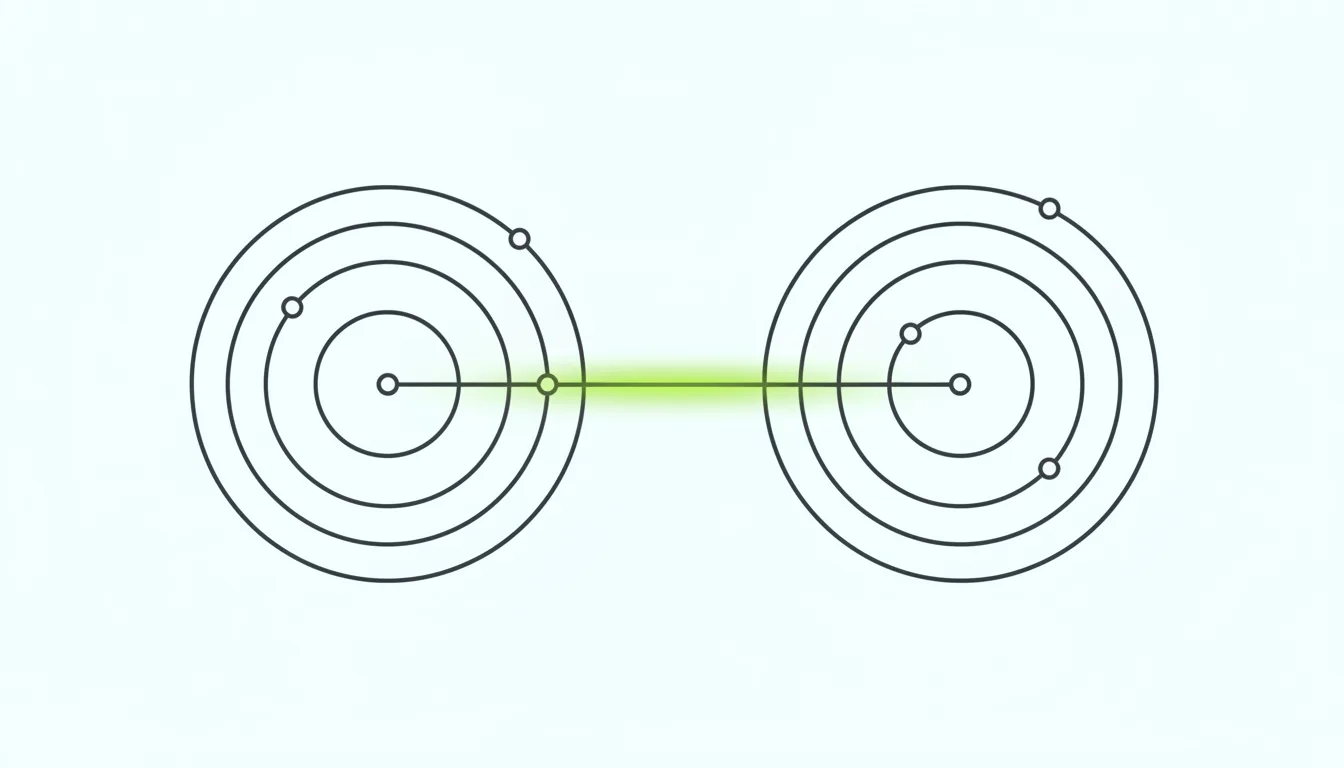
Sooner or later a reward programme you like will live on a chain your funds are not on. The offer looks attractive, the instructions look simple, and there is one extra step in the middle described in a single friendly sentence: bridge your assets across.
That sentence hides more than it says. Bridging is not a transfer in the ordinary sense, and understanding what it actually does is the difference between accepting a risk knowingly and absorbing one you never saw.
Your coins do not cross anything
Separate blockchains cannot see each other. They have no shared ledger, no messaging channel and no built-in way to verify what happened elsewhere. A coin on one chain therefore cannot physically move to another. There is no tunnel.
What a bridge does instead is run a two-part arrangement. On the origin chain, your assets are locked into a contract or handed to a custodian and held there. On the destination chain, a matching amount of a representation is issued to you, often called a wrapped or bridged token.
That representation is a claim. Its value rests entirely on the promise that the locked originals are still there and still redeemable. Reverse the process and the representation is destroyed while the originals are released.
So after bridging you no longer hold the asset you started with. You hold something that is backed by that asset, on a different chain, under a different set of assumptions. Most of the time the two behave identically. The gap between them only becomes visible when something breaks.
What that gap can mean
Because a bridged token is a claim rather than the thing itself, its risk profile is different in ways worth naming.
- The backing has to hold. If the locked reserves become unreachable or are drained, the representation on the far side can lose its link to the original while still sitting in your wallet looking normal.
- Not all wrapped versions are the same. Several bridges can issue their own representation of the same underlying asset, and those versions are generally not interchangeable. Acquiring one on the destination chain does not mean you can redeem it through a different bridge.
- Liquidity can be thinner than expected. A representation may trade well on the destination chain while conditions are calm, and become difficult to exit precisely when you most want to.
- Return trips are not guaranteed to be available. Bridges can pause, deprecate a route or stop operating. The path in and the path out are separate assumptions.
Why bridges attract attackers
Bridges concentrate a great deal of locked value in a small amount of code, and they have to make a genuinely hard judgement: convincing one chain that something definitely happened on another. That verification, however it is designed, is the weak point. Trusted-party designs depend on a set of signers behaving correctly and staying secure. Contract-based designs depend on the correctness of code handling the most valuable position in the system.
Bridges have historically been a frequent target of attackers for exactly these reasons, and the category has a reputation for it that is worth taking seriously as a category, without needing to recite any particular event. Treat bridge infrastructure as one of the higher-risk pieces of the ecosystem rather than as plumbing.
Risk stacks, it does not average
This is the part that reward maths tends to skip.
When you bridge assets to farm a return somewhere else, you are not swapping one risk for another. You are holding several at once, and every one of them must hold for you to come out whole:
- The bridge contract or its operators, for as long as you are on the far side.
- The reward protocol you are actually there for.
- The destination chain itself, including its validators and its ongoing liveness.
- Your own exit route back, whenever you eventually want it.
Any single failure in that chain can cost you the position. An advertised return quoted against only the reward protocol is describing one link and staying quiet about the rest. Higher yields on a distant chain frequently exist because of that extra distance, not in spite of it — you are being paid, in part, to accept the crossing.
Nothing here is financial advice, and no reward programme is guaranteed income. Advertised rates change, pause and disappear, and the return of your capital is never assured.
Questions worth asking before you cross
You do not need to read contract code to think clearly about this. A few plain questions get you most of the way:
- Who or what secures the crossing? A defined set of signers, or code? Neither answer is automatically better, but a bridge that will not tell you at all has answered anyway.
- Is the exit route as solid as the entrance? Confirm there is a working way back, and ideally more than one.
- Which representation am I receiving? Know which bridge issued it and where it can actually be redeemed or sold.
- Does the extra return justify the extra layer? A modest premium for a materially larger risk surface is a poor trade, however good the headline looks.
- How long am I planning to stay? Exposure is roughly a function of time. A short, deliberate trip is a different proposition to leaving funds parked indefinitely.
Practical habits
If you do cross, cross carefully. Reach the bridge through a route you already trust rather than a link from a message or an advertisement, applying the same domain check described in our scam alerts guidance — fake bridge front-ends are a well-worn tactic. Send a small test amount first and complete a full round trip before committing more. Keep a record of which bridge you used and which representation you hold, because months later that detail is what determines whether you can get back.
Our how we vet page explains how we assess reward programmes and what we deliberately do not claim to know, and the radar lists what we have looked at.
A note on what we ask of you
TokenSpin is an independent publication, not an operator, not a bridge and not a wallet. We do not ask you to connect a wallet, sign a transaction, approve a token or enter a recovery phrase, and no genuine communication from us ever will. If a page or message claiming our name asks for any of that, it is not us. Our FAQ sets out what we do and do not do.
Cross-chain rewards are not automatically a bad idea. They are simply a longer chain of things that must go right, and the honest version of the offer includes that. Decide with the whole picture in front of you.
Get The Spin
The week's vetted rewards + the scams to avoid — free, every week. Informational. Not financial advice. We never ask for your keys.